Pantone colours explained
Materials explained · November 2026 · 5-minute read
Borosilicate glass is a type of glass made with boron trioxide, which makes it far better at handling sudden changes of temperature than ordinary glass. It barely expands when heated, so it's used for laboratory beakers, oven dishes, teapots and high-quality glass bottles.
The everyday glass in most windows and tumblers is soda-lime glass. It's cheaper to make, but it is much more likely to crack if you pour boiling water into it.
The chemistry
Why does borosilicate glass resist heat so well?
It resists heat because it expands very little as it warms up. When glass heats unevenly, one part tries to grow faster than another and the strain causes a crack. If there's hardly any expansion, there's hardly any strain.
The German glassmaker Otto Schott developed the material in the late 19th century, when scientists needed glassware that could survive being heated and cooled repeatedly. It's still the standard in laboratories today, for much the same reason.
One thing borosilicate doesn't do is make glass unbreakable. Drop it on a stone floor and it will still break, although it tends to break into larger pieces than tempered glass does.
Side by side
What's the difference between borosilicate and regular glass?
The key difference is how each one copes with heat: borosilicate handles sudden changes, and regular soda-lime glass generally doesn't. Weight, feel and price also differ, as the table shows.
| Borosilicate glass | Soda-lime glass | |
|---|---|---|
| Main ingredients | Silica and boron trioxide | Silica, soda and lime |
| Thermal shock | Strong resistance | Weak resistance |
| Weight and feel | Usually lighter and thinner | Usually heavier |
| Typical price | Higher | Lower |
| Common uses | Lab equipment, oven dishes, teapots, double-walled cups | Windows, jars, everyday drinking glasses |
| Recycling | Generally shouldn't go in household glass recycling containers | Widely recycled |
You can't reliably tell the two apart by eye. Look for the words on the packaging or product description, and be a little wary if a very cheap item claims to withstand boiling water without saying what it's made from.
In the kitchen
Is borosilicate glass safe for food and drink?
Yes, borosilicate glass is widely used for food and drink because it's non-porous and doesn't pick up flavors or smells. That makes it a popular choice for tea, coffee and water for people who dislike any aftertaste from plastic or steel.
Most plain borosilicate items are also fine in the microwave and oven, but that depends on the whole product. Metal rims, bamboo lids, silicone sleeves and double-walled designs can all change the rules, so go by the care label each time.
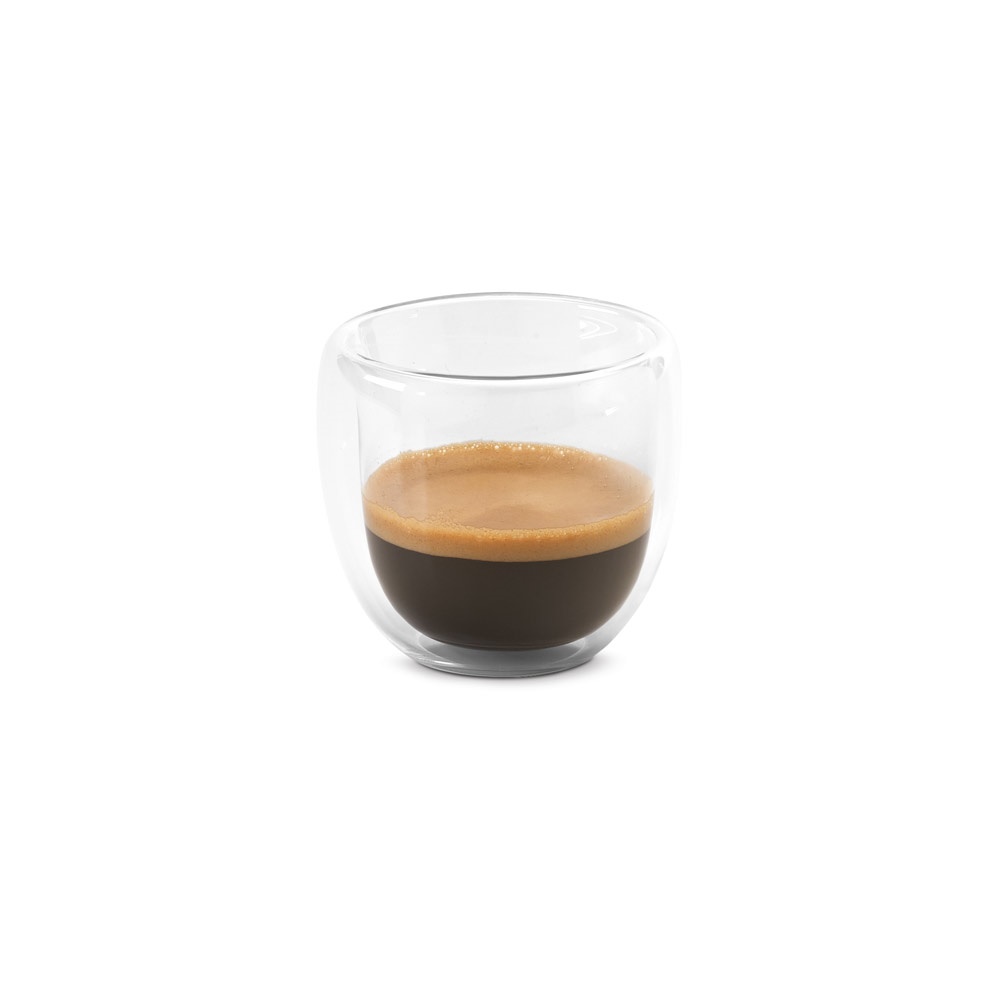
Double-walled glasses are nearly always borosilicate. The inner wall gets hot while the outer stays cool, and ordinary glass would struggle with that difference.
Hand washing is the gentlest option for decorated glass, and our knowledge bank on materials has more background on how different surfaces behave.
Putting it to use
When is it worth choosing borosilicate for a branded gift?
It's worth it when the product will hold hot drinks or get regular use. For a beer glass at a single event, plain glass is a sensible saving.
Current listings on our site include double-walled borosilicate tumblers with bamboo lids, to-go coffee cups with silicone lids and small thermos glass sets with bamboo coasters. Most sit within our personalised glass mugs and the wider personalised glassware collection.
Matching the glass to the occasion
- Office coffee and tea: coffee mugs and glass cups side by side
- Bars and restaurants: catering giveaways, along with beer glasses and wine glasses in plain glass
- Hotels and guest rooms: hotel gifts
- Staff kitchens: the broader range of kitchen giveaways
If a drink will be hot, the glass around it should be chosen for that job.
Smaller runs are possible too, through our small-quantity glassware pages. If you'd prefer something to carry around, compare glass with infuser water bottles, which suit people who like fruit or tea in their water. A printed logo on glass will last longer with gentle washing, so it helps to mention care in any note that goes with your gift.