
The best trade show booth ideas are often surprisingly simple: a clear message, an open booth space, and an activity where visitors can try something out or ask a specific question. Depending on your budget, you can add product samples, small giveaways, interactive demos, or a dedicated consultation area.
In a packed exhibit hall, companies, displays, banners, and countless impressions all compete for attention at once. If you're planning a booth, you mainly need to decide two things: What should visitors notice first? And what should they experience at the booth?
A good trade show presence starts with a question: What should someone understand about your company after a few seconds?
Which trade show booth ideas fit which budget?
A small booth gets by with a clear message and a well-presented product. With a bigger budget, live demos, digital presentations, or separate meeting areas become possible.
Whether the extra effort pays off depends on your trade show goal. If you want to make as many first contacts as possible, you need a different booth than a company that mainly keeps scheduled customer appointments.
Eleven booth ideas with typical use and planning effort:
| Booth idea | Budget | Typical use | What to plan for |
|---|---|---|---|
| Clear core message on the back wall | Small | Quick orientation | Short text, easy-to-read booth graphic |
| Product sample to touch | Small | Products with features that are easy to explain | Sample, suitable display surface |
| Prepared conversation opener | Small | First contacts and technical conversations | Short team briefing |
| Matching apparel and name badges | Small to medium | Recognizable team presence | Suitable apparel and badges |
| Useful giveaways | Small to medium | Walk-by traffic and conversation leads | Selection, printing, quantity planning |
| Short expert consultation at the booth | Small to medium | Visitors with specific questions | Trained staff, quiet conversation spot |
| Quiz or small interactive game | Medium | Topic-based conversation starters | Questions, staffing, prizes if applicable |
| Smartphone charging station | Medium | Added visitor service | Power, floor space, safe setup |
| Live product demonstration | Medium to large | Products that need explanation | Demo area, equipment, expert staff |
| Digital or AR product presentation | Large | Complex or large products | Development, devices, staffing |
| Separate consultation area | Large | Longer or confidential conversations | Enough space and furnishings |
The budget levels are for orientation only and don't correspond to fixed price ranges. Actual costs depend on the trade show, booth space, equipment, staffing, and any service providers you hire, among other factors.
On a small budget, first check what you already have
Before you invest in new booth components, take a look at what you already have. Is your offer instantly clear on the back wall? Is there a product visitors can look at or try out right away? Does your team know which question it wants to open a conversation with?
Many improvements mostly cost preparation. Matching apparel and custom printed lanyards make the people at your booth easier to spot.
With a bigger budget, the same check applies: Does the product really need an elaborate digital presentation, or would a short live demo explain it more clearly?
Not much space? Then every surface needs a job
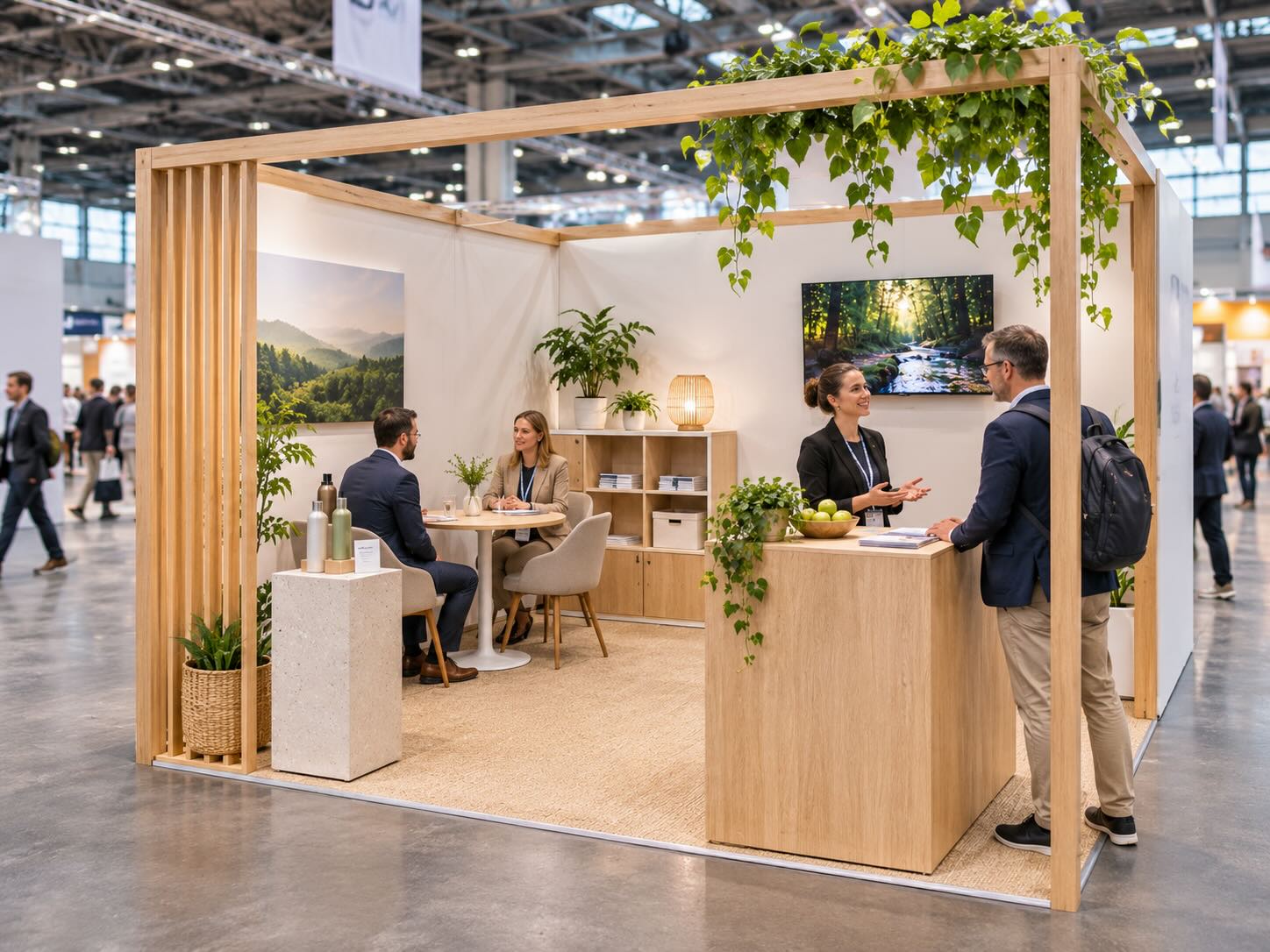
Small booths fill up fast. A counter, two brochure racks, a screen, and several boxes leave little room for visitors.
If you want to design a small booth, first decide what truly has to be visible. Everything else gets a fixed spot out of direct view.
Keep the entrance open
A large counter right at the open edge of the booth quickly looks like a barrier. If it stands to the side, visitors find it easier to walk up to a product or a contact person.
A deliberately separated area can make sense for confidential conversations or special security requirements.
Make good use of the back wall
The back wall is often the largest continuous surface in a small booth. It holds your core message, a recognizable brand element, and, if needed, a strong product image.
Long feature lists are almost impossible to take in from the aisle. Put one product front and center instead of presenting ten offers at once.
You can share the details in conversation, on a product card, or through a QR code with further information.
Plan for order from the start
Jackets, drink crates, packaging, and spare materials need storage space. A closed cabinet or a small storage area helps more than an extra display table.
Marketing materials don't all need to be out, either. Keep a small selection within reach and stash the rest in the cabinet.
If you want visitors to take documents or product samples with them, custom printed cotton tote bags are a practical addition.
A good conversation starter matters more than the next attraction
A prize wheel draws attention, a product demo prompts questions, and a cup of coffee creates a relaxed moment.
Which activity belongs in your presence depends on what you offer. A quiz on a technical topic leads straight into a conversation about your product. A random prize drawing, on the other hand, also attracts people who have little interest in your company.
So also ask yourself what happens after visitors stop.
Let visitors try things out
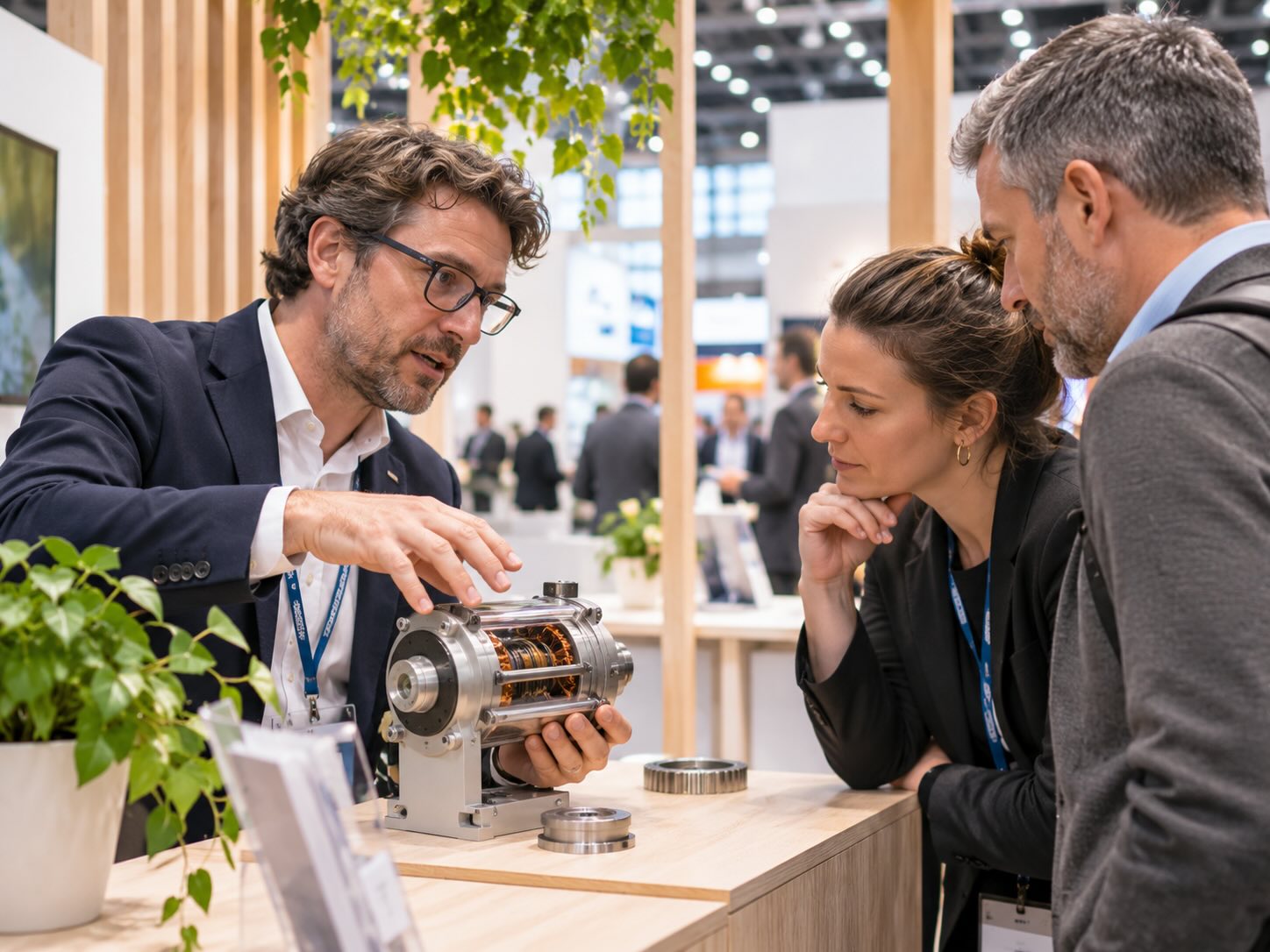
For products that need explaining, a short demo is often more vivid than another presentation slide. That could be a material sample visitors can touch, a tool in use, or a software feature on a screen.
The demo doesn't have to be long. It should answer one specific question: What does this product do, and why might it matter to me?
Plan enough space and someone who can answer questions. For technical demos, add power needs, safety, and noise to the list.
Choose activities based on your trade show goal
With heavy foot traffic, a quick interactive activity pays off. At a trade show with scheduled customer meetings, a quiet conversation area is often more important. These three questions help you choose:
- What should visitors do? Try something out, answer a question, or start a consultation?
- What do they learn from it? A product feature, a possible solution, or something about your company?
- What happens next? Does it lead naturally into a conversation?
If the activity has no connection to your offer, all that's left is the entertainment.
Giveaways as part of the conversation
A promotional product needs a job, too. A notepad is immediately useful at a professional trade show, a pen with your logo fits into many visitors' workday, and a higher-quality gift can be handed over after a longer conversation.
Distinguish between small take-away items for many visitors and gifts for selected contacts. Which products work for which trade show situation, and how to plan distribution, is covered in more detail in our guide to trade show giveaways and promotional products.
Important when planning: Depending on the event, special rules apply to tastings, beverage stations, sound systems, and technical activities. Check the exhibitor guidelines early. The Technical Guidelines of Messe Düsseldorf (in German) show examples of the requirements that can apply.
What visitors see from the aisle shapes the first impression
Before anyone steps into your booth, they first see the back wall, a few products, people, and maybe several screens. Details only become visible as they get closer. So take a look at your booth from the aisle's point of view.
In its guide to successful trade show participation, AUMA, the association of the German trade fair industry, describes four steps on the way to a personal conversation: visitors get oriented, get informed, develop understanding and interest, and finally want to communicate. Your booth design should make that path as easy as possible.
Message first, details second
Your company name alone doesn't always explain what you offer. A short statement about the concrete benefit helps visitors place your offer faster.
Make sure the type is large enough, the contrast is strong, and nothing blocks it, such as furniture or other visitors. A clear statement does more than a back wall where many messages compete for attention at once.
Use lighting with purpose
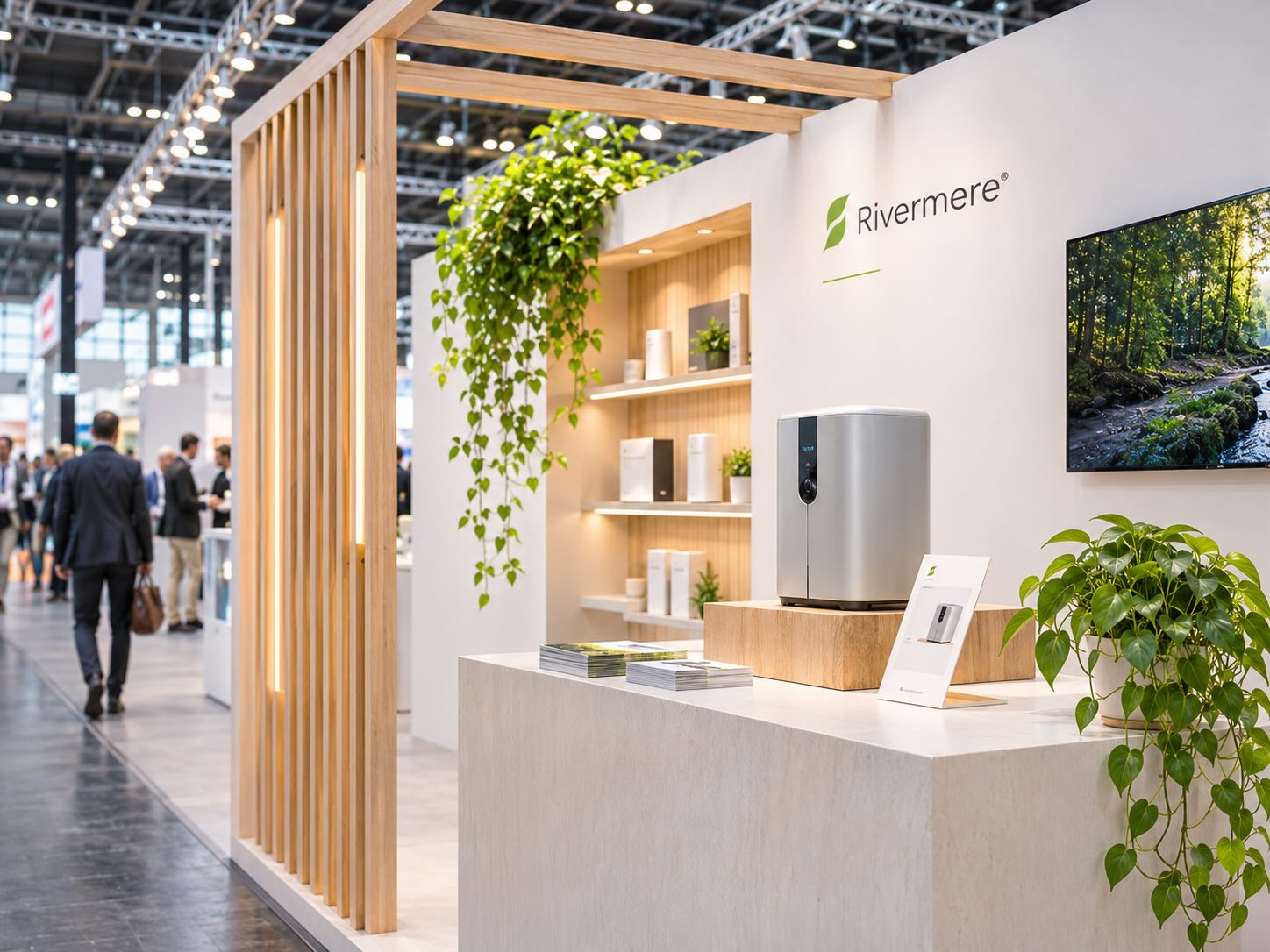
Not every booth needs flashy lighting effects. For physical products, targeted lighting makes materials, colors, and details easier to see. For screens, mainly avoid distracting glare.
The light should direct attention to what you offer.
Create a consistent look
Banners, display surfaces, apparel, and information materials don't have to look identical. They should be recognizable as parts of the same brand presence.
Recurring colors, fonts, and imagery create a visual link between the individual elements. That includes product cards, business cards, and matching marketing and print materials.
A restrained design often gives the product more room than a logo on every free surface.
The booth is done. Is your team ready?
A well-designed booth is only one part of the preparation. If it's unclear who runs the product demo, how contacts get recorded, or what happens when something technical goes wrong, things get chaotic fast on the show floor.
Do a walkthrough together before the first day, from a visitor's point of view.
Checklist for your trade show presence
Before the show
- Is the main message clear from the aisle?
- Does the activity speak to your target audience and support your trade show goal?
- Are the entrance and walkways clear?
- Is there storage space and a spot for conversations?
- Are samples, materials, and giveaways ready?
- Are equipment and required approvals sorted out?
- Does the team know its tasks?
During the show
- Are samples and display surfaces tidy?
- Are the demos running smoothly?
- Are important questions and contact details being recorded?
- Is it clear which contacts will get a follow-up?
After the show
- Are contacts assigned to the right people?
- Are promised information and quotes being sent?
- Have you noted what worked and where problems came up?
A good conversation doesn't end at the booth
In its trade show lead management guidance, AUMA recommends recording contacts systematically and following up in a targeted way.
In your follow-up, pick up where the conversation left off, as long as privacy rules allow you to make contact. If someone asked about a specific product feature or requested a quote, return to exactly that topic.
An internal debrief is worthwhile, too: Which questions came up most often? Which demo had to be explained again and again? Where did people have to wait?
Observations like these help you plan your next trade show.
Conclusion: A good booth gives visitors direction
A clear message, a well-presented product, and a prepared team form a sensible foundation for almost any booth concept. With a bigger budget, more elaborate demos or separate consultation areas come into play.
Sources and background
- AUMA (2023): Erfolgreiche Messebeteiligung (Grundlagen) [Successful Trade Show Participation: Fundamentals], in German, especially booth design and booth equipment, p. 45.
- AUMA: Messe-Leadmanagement [Trade Show Lead Management], in German, expert information on capturing and following up trade show contacts.
- Messe Düsseldorf: Technische Richtlinien [Technical Guidelines], in German, example of event-specific requirements.


· 11 min read


