
Two tote bags can look almost identical in a photograph. Pick them up, though, and the difference is obvious: one folds into a pocket; the other keeps its shape on the table.
That difference becomes important when the bag leaves the shop or exhibition stand. Someone collecting a leaflet needs very little from a tote. Someone carrying groceries home needs sound seams, comfortable handles and a material suited to repeated use.
So what's the best fabric for tote bags? Cotton canvas is a strong starting point for an everyday shopper, but it isn't the universal winner. Lightweight cotton suits lighter contents, jute has a distinctive coarse texture, and polyester can make a bag easier to fold away. Start with the job rather than the fabric label.
Which tote bag material is best for which use?
A shopping bag has to survive being filled and carried. A conference tote might only need to hold a programme and notebook. That is why comparing materials by a single 'durability score' can be misleading: two bags made from the same fiber may have different handles, linings, seams and load limits.
These six materials offer different starting points. The recommendations below are practical guidance, not guarantees for every bag in a category.
| Material | Look and feel | Useful for | Check before ordering |
|---|---|---|---|
| Cotton canvas | Firm, closely woven, often structured | Everyday shoppers, merchandise, retail | Fabric weight, handle reinforcement, wash instructions |
| Lightweight cotton | Soft, flexible, easily folded | Leaflets, light event handouts | Seam strength and maximum recommended load |
| Recycled cotton | Varies with yarn blend and finish | Projects with verified recycled-content requirements | Actual recycled percentage, traceability and construction |
| Jute | Coarse, textured, often quite rigid | Gift sets, food retail, rustic presentation | Surface coating, lining and small-print legibility |
| Non-woven polypropylene | Light, sheet-like, flexible | Exhibitions and lightweight distribution | Handle joints, tear resistance and intended reuse |
| Polyester or rPET | Often smooth, light and packable | Foldable shoppers, commuting, outdoor activities | Weave, coating, wash care and print compatibility |
To compare real designs, browse personalized cotton bags, jute bags, non-woven bags and polyester bags. Product specifications matter more than a category name alone.
What does fabric weight mean for a tote bag?
Fabric weight is usually shown in grams per square metre, or g/m² (sometimes called GSM). It tells you the mass of one square metre of the fabric, not the weight of the finished bag and not a certified carrying capacity.
For example, Loopper's tote bag listings include cotton models labeled 100 g/m² and 140 g/m². If the two bags use comparable cotton fabrics and construction, the 140 g/m² cloth has more mass per square metre and may feel more substantial. That alone does not prove it can carry more weight.
An example of a lighter fabric found in these listings. Worth considering for leaflets or other light contents, subject to the bag's own specifications.
An example of a heavier fabric. It may have more body than the lighter option, but handle attachment and stitching still need checking.
Inspect how the handles join the bag, the type of stitching, whether the bottom has a gusset and whether the supplier states a tested or recommended load. A strong fabric cannot compensate for weak seams.
Handle length also changes how a bag feels in use. A shoulder-length handle can be convenient for heavier or bulkier contents; the cotton bag range shows why strap design deserves attention alongside the fabric.
Is canvas better than cotton for tote bags?
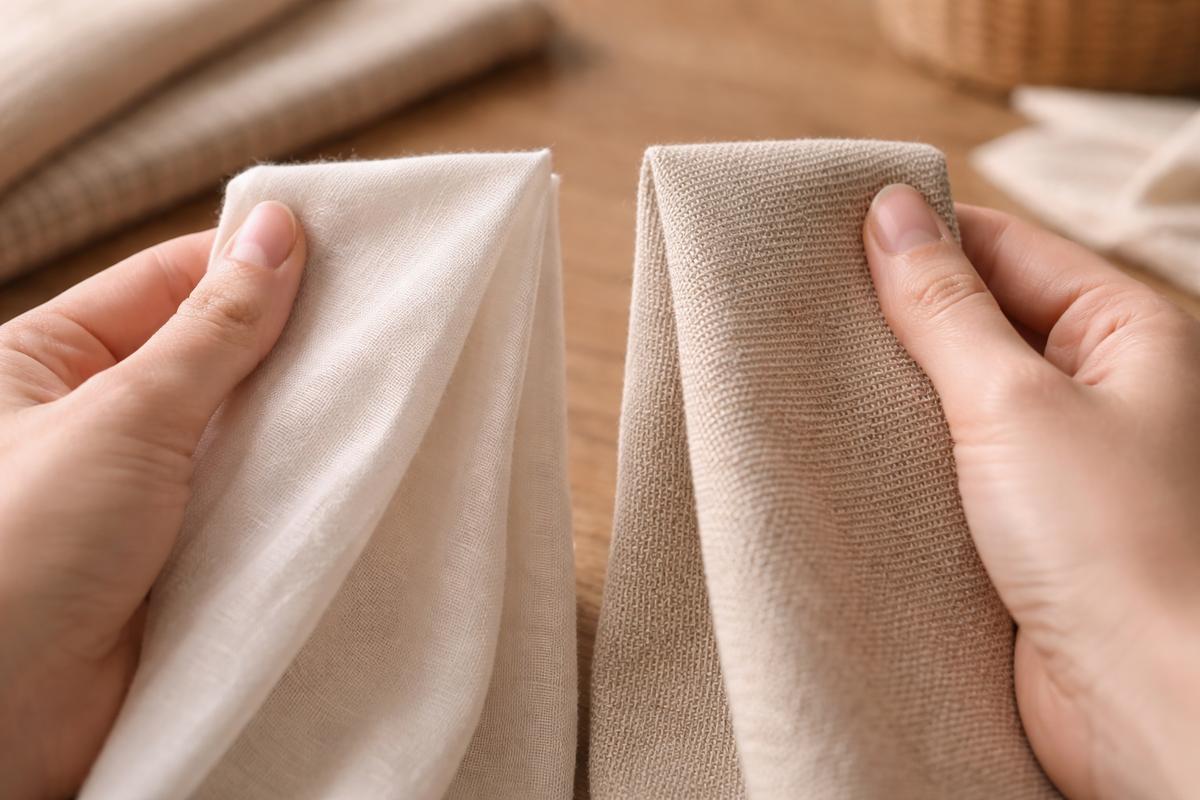
It's an understandable question, but the terms describe different things. Cotton is a fiber; canvas is a type of fabric construction. Many canvas tote bags are made from cotton, using a relatively firm, closely woven cloth. Canvas can also contain other fibers or blends, so check the material description.
A canvas bag can be an appealing choice when you want a more structured everyday shopper: the material often feels reassuringly substantial and offers a good surface for a visible logo. Lightweight plain-woven cotton, by contrast, can be easier to fold and carry to an event.
There is a further question behind the material choice: how long will somebody want to use the bag? A well-made bag in a style people find comfortable is more likely to earn a place in their routine. But we should not treat cotton, recycled cotton or jute as automatically having a lower environmental impact. Fibre sourcing, processing, dyeing, transport and actual use all matter.
When recycled material is part of the brief, ask for the verified recycled content, not just a green product label. Explore eco-friendly cotton bag options while checking what each product actually claims.
Which tote bag fabric works best with your logo?
The smoothness and texture of the material affect how fine a logo can appear. A closely woven cotton surface may give a detailed print a clearer edge than coarse jute. A small slogan on a rough weave can become difficult to read, even when the artwork looks perfect on screen.
Ask about the exact decoration method available for the chosen bag. A method that works for one cotton model may not be offered for another, and coatings or mixed fibers can change the result.
Screen printing
Often useful for bold, relatively simple designs on suitable cotton bags. Colour count, fabric and order size all influence what is practical.
Digital printing
Can accommodate detailed artwork and multiple colors where the specific fabric and printing system are compatible.
Transfer printing
Worth considering for more complex designs on suitable flexible materials. Confirm how the transfer feels and how it should be washed.
Embroidery
Adds texture rather than a flat print and can suit sturdier fabrics. Small lettering and fine details may need simplifying.
Loopper's guide to printing techniques explains how printing methods differ. Once you have chosen a fabric, request a digital proof showing your artwork at the actual position and size. That is particularly helpful for jute, dark fabric and logos with fine lettering.
Care matters too: do not assume every cotton tote is machine washable. Washing instructions depend on the fabric finish, handles, lining and decoration. Follow the care information for the selected product, especially if the logo is printed or transferred.
For branded merchandise, the best choice is not always the thickest, cheapest or most natural-looking cloth. It is the bag whose fabric, construction and print suit the way people will actually carry it. That is what makes a personalized tote bag useful beyond the day it is handed over.
Further reading


Marketing team, Loopper
Wissam writes about promotional products, their design and the way people use them in everyday life.
 Content reviewed by Lars Rud, Marketing Manager at Loopper


