· 9 min read
A brand does not need to shout from every garment. Sometimes the most convincing signal is the one that fits naturally into everyday life.
On a video call, a logo may be only a small detail. The hoodie hangs over the chair, the thermobecher sits beside the keyboard and the notebook travels between home office and company office. That is where quiet branding begins: with things that feel useful and wearable, not like advertising space.
Quiet branding borrows from the idea of quiet luxury, an understated aesthetic built around quality, classic colors and small brand signals. For companies, the useful lesson is simple: corporate apparel and merchandise can express a corporate identity without turning employees into walking billboards.
This approach is not right for every situation. At trade shows, events or in field sales, a visible logo can help people recognize a team quickly. For employee gifts, onboarding and hybrid work, the priorities are different. Wearability, usefulness and belonging matter more.

What is quiet branding?
Quiet branding means making the brand visible with restraint. Instead of a large print, a company might use a small chest logo, tone on tone embroidery, an inner label or a subtle embossed mark. The brand is still there, but its position is more deliberate.
This also makes corporate identity feel broader than a logo and color code. Material, fit and the care taken in choosing an item are part of the identity too. A good employee gift should communicate attention, not simply add another advertising surface.
Would your team enjoy wearing or using this item in everyday life? If the cut, material and color work well, the logo does not need to dominate. A subtle finish can keep the corporate identity visible without taking over the product.
Why understated branding can be worn more often
A bold logo is easy to recognize, but it can limit where an item feels appropriate. A high contrast print may work at an event and feel uncomfortable at home or in a customer video call.
Neutral colors, versatile shapes and a small embroidered mark leave more room for everyday use. If you want to embroider or print hoodies, look beyond logo size. Fit, fabric, color and placement determine whether the garment becomes a favorite or stays in a drawer.
PPAI Research reported in 2026 on a survey of more than 3,400 US consumers. Nearly 90 percent said they kept branded merchandise regularly or occasionally. That does not prove that every branded item will be used for years. It does show why usefulness and quality matter more than visibility alone.
The same principle applies to employee gifts. A carefully selected item can say that the company wants to give something useful. A loud logo can create the opposite impression. Quiet branding shifts the balance toward the person receiving the item.
Techniques for subtle brand signals
The right finish depends on the material, the product and the intended use. These options provide a starting point. Always confirm the exact decoration on the chosen model before ordering.
| Technique | Effect | Suitable for |
|---|---|---|
| Tone on tone embroidery | The motif remains visible but blends into the fabric. | Hoodies, sweatshirts, polos and jackets in calm colors. |
| Small chest logo | The brand is recognizable without dominating the surface. | Polos with an embroidered logo and sweatshirts. |
| Inner label | A brand detail that appears only when someone looks closer. | Suitable garments with enough label space. |
| Embossing | Shape and light create the mark instead of strong color. | Suitable notebooks, bags and accessories, depending on the material. |
| Monogram embroidery | Initials add a personal touch. | Selected employee gifts, with names and quantities confirmed in advance. |
Compare the options in this overview of decoration techniques. The most visible solution is not always the most useful one. For example, a custom sweatshirt can feel more versatile when the decoration is calm and well placed.
Corporate identity in hybrid work
Hybrid teams lose many of the small encounters that create a sense of belonging. People no longer automatically see the mug on a desk or the jacket someone wears on the way to work.

A small shared detail can connect different places. It might appear on a fleece jacket, a softshell jacket or a bag. In the office it creates a shared look. At home it can remain personal and understated.
Clothing does not replace communication and it does not create belonging by itself. It can provide a visible anchor during onboarding, team days and the first in person meeting.
Our overview of branded corporate apparel covers the wider selection process. Quiet branding adds one more question: would people still enjoy the item away from work?
A quiet branding lookbook
Click through three situations and see how the role of the brand can change.

The everyday piece
Neutral colors, a small embroidered mark and comfortable fabric make the garment useful beyond the workplace.

The shared signal
On a team day, a shared color or small symbol can create visual connection without turning the group into an advertisement.
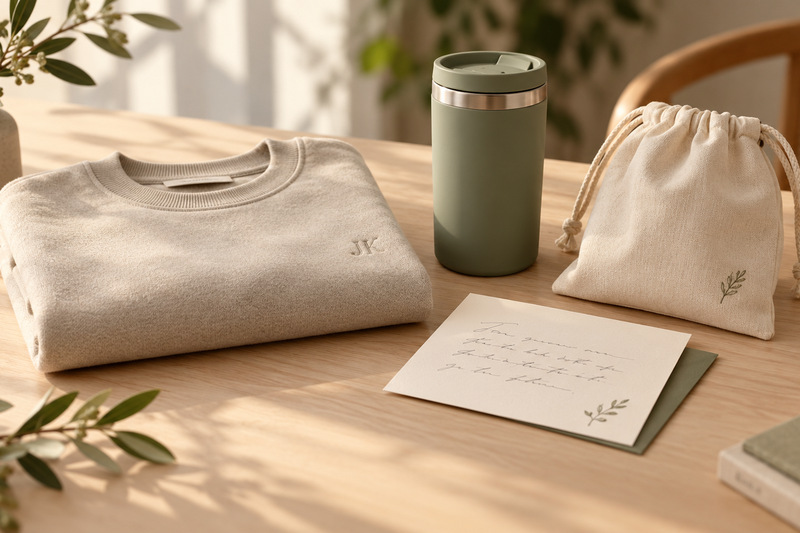
The gesture behind the object
A monogram, a card or a carefully chosen color can make a gift feel personal while keeping the design quiet.
Home office and onboarding kits
A good kit is not the largest one. It is a small selection with a clear role in the recipient’s routine. A home office kit might include a notebook, a mouse pad and a travel mug. A laptop bag only makes sense if it fits the existing equipment and commute.
For new employees, onboarding kits can combine practical equipment with a personal welcome. A short message often does more than adding another item.
Quality before quantity
Understated branding does not make a poor product valuable. If employee gifts are meant to be used privately, comfort, care instructions, durability and fit matter first. Sustainable materials should be checked through the specific product details and available evidence, not through a label alone.
The most useful quantity is the amount people can realistically use. Ask about colors, sizes and routines before ordering. That turns merchandise into a believable part of the corporate identity instead of a compulsory uniform.
FAQ about quiet branding and corporate apparel
What does quiet branding mean for corporate apparel?
Quiet branding makes the brand visible through restrained details such as a small chest logo, tone on tone embroidery, an inner label or subtle embossing. The item should work in everyday life instead of feeling like a billboard.
Which garments work well for subtle branding?
Versatile basics such as polos, hoodies, sweatshirts, fleece jackets and softshell jackets are good starting points. Color, fit, material and the decoration method should be considered together.
Is embroidered corporate apparel more sustainable?
Embroidery does not automatically make a garment sustainable. A durable, well fitting product that is actually used can support longer use. Check the material, evidence, care instructions and decoration together.
What belongs in a home office or onboarding kit?
Choose a few useful items such as a notebook, mouse pad, travel mug, laptop bag or suitable garment. Add a personal message and make sure the items work between home office, company office and commute.