
Some team days leave mostly the logistics in your head: the delayed train, the buffet, the rain that turned the barbecue area into a bog. So how do you create a day people remember for other reasons?
The trend is moving back toward experiences where people make something by hand. Someone from accounting turns out to be surprisingly good with sandpaper, the team lead loses track of time while cooking, and months later it is still a story somebody tells.
The difference rarely comes down to budget. It usually depends on whether participants watched or actually did something themselves. At creative team workshops, it is enough for people to spend a few hours doing something there is no room for in a normal working day: cooking, writing, working with wood, inventing a game.
Why simply being there is no longer enough
A normal working day consists largely of things you cannot touch: emails, files, approvals, slides and countless meetings. By evening much is done and little is visible. Perhaps that explains why the wish to do something with your hands is growing.
The study Experience Economy 2026 by Mastercard and Trend Hunter (in German) offers a few figures on this. According to it, 60 percent of respondents in Germany say experiences matter more to them than ever. 43 percent want to learn new skills on vacation and value that more than a souvenir, with cooking, languages and crafts especially popular. And 70 percent say shared experiences strengthen relationships.
The study has nothing to do with team events as such, but it hints at an expectation: given a free afternoon, people want to experience something and, ideally, join in rather than watch.
A cooking class is more than a dinner, because you stand at the stove yourself and learn a technique. A crafts class shows how an object comes into being, including the failed attempts along the way. The result belongs to those who made it.
Not every workshop has to teach a skill. But an appointment where everyone is present feels different from one where everyone has something to do.
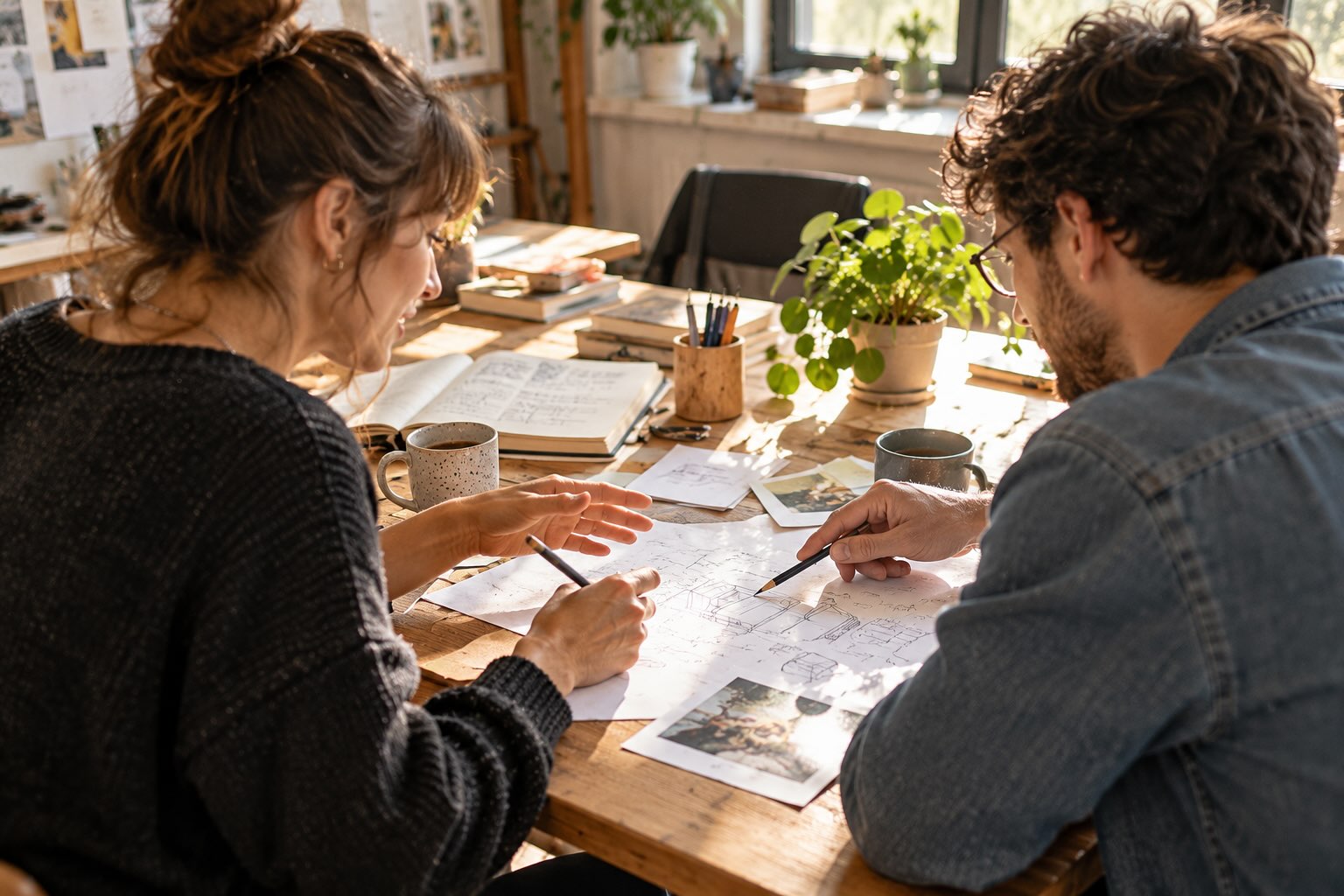
When colleagues suddenly show other sides
In a kitchen, different things count than in a meeting room. A good presentation helps little when the sauce is burning at the same time.
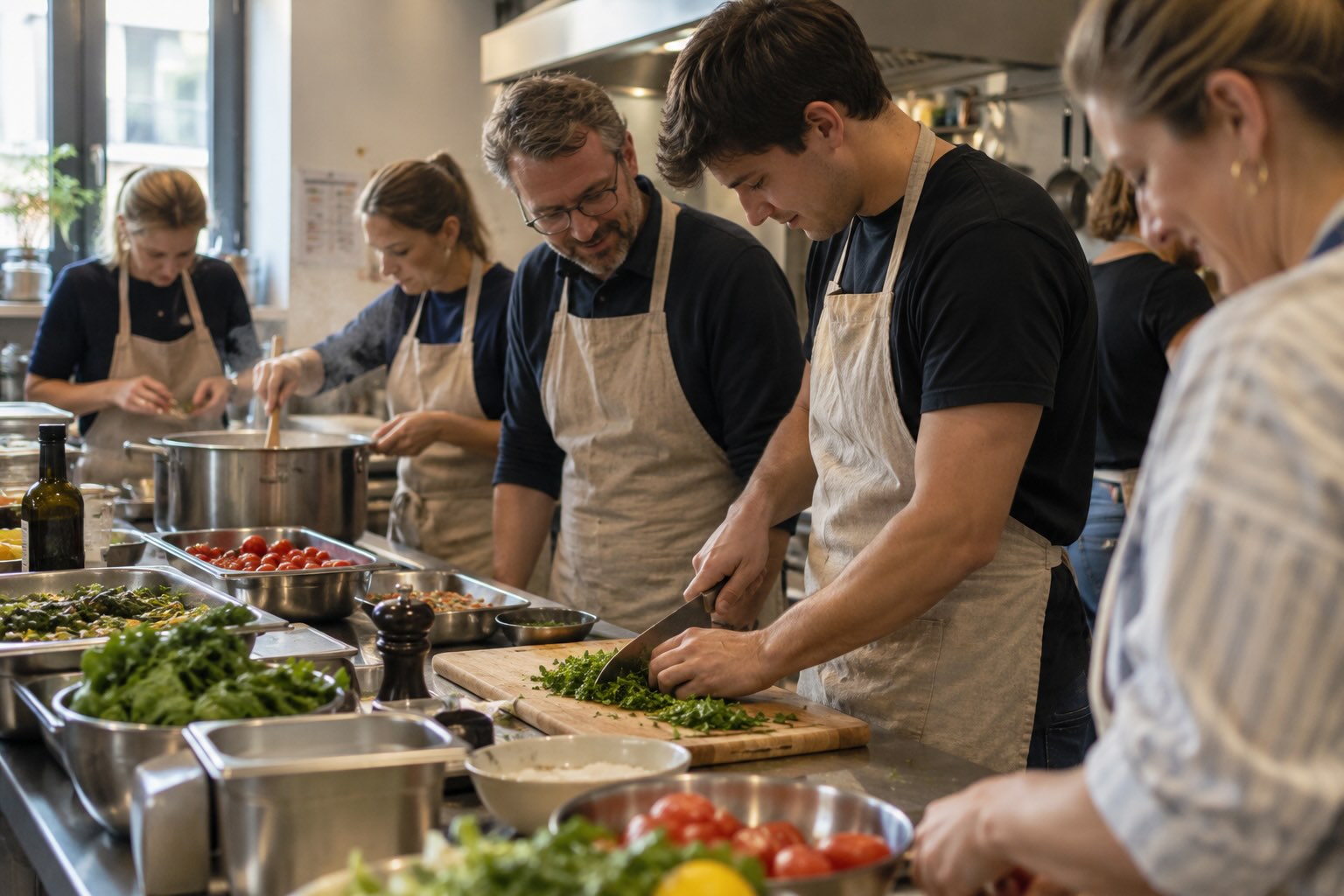
The company HSM describes in its employee magazine from May 2025 (pp. 38–39) a company outing to the Cookionista cooking school in Nuremberg. The team cooked a multi-course menu in small groups, and the tasks were shared among them. One apprentice stands out in the report: usually reserved, but here revealed as an experienced hobby cook.
The door technology manufacturer GEZE set a different emphasis in 2025. In the company canteen at its Leonberg site, a cooking workshop on seasonal, sustainable cooking took place as part of the company’s own sustainability year. Employees worked with concrete ingredients and recipes. Sustainability thus became something you can repeat at home.
HSM shows how little we sometimes know about the people we work with every day. The reserved apprentice who suddenly turns out to be an experienced hobby cook in the kitchen is a good example. His skill was already there. In normal working life there was simply no occasion to show it. A shared workshop can bring out such sides, because for a few hours other things count than responsibilities, positions and professional experience. That does not mean roles in the office change afterward. But perhaps next time you talk, you look at each other a little differently.
GEZE uses cooking together for a different purpose. Sustainability is a big word that quickly disappears into strategies, targets and presentations in a company. Preparing a seasonal dish turns it into something concrete: Which ingredients do we use? What can we make from them? What could I try at home myself? The workshop makes the topic accessible without employees only having to talk about it. Whether it changes habits in the long run remains open.
The two examples thus show two different ways to use creative team workshops. At HSM the encounter takes center stage, at GEZE the practical engagement with a topic. What they share is that participants do not just listen but act themselves. Both reports come from the companies themselves, however. They describe what happened on those days, not what effect was still detectable months later.
Joining in helps, but it doesn’t replace team development
That active doing helps learning is well studied. A meta-analysis by Freeman and colleagues (2014) evaluated 225 studies from science and engineering university courses. Students in active learning formats performed better on average than in pure lectures.
A cooking class among colleagues is again something different from a lecture, but the core applies there too: if you are meant to learn something, you have to practice, try things out and get feedback.
On collaboration, the picture is mixed. In 2025, Belot and Hakimov studied in a field experiment what regular shared activities at the office locations of a large company achieve. Colleagues’ relationships with one another improved. Individual productivity did not rise. The activities studied were recurring ones such as picnics and game nights, not individual creative workshops.
A successful afternoon therefore does not replace team development. If you don’t feel heard in your team, even a pottery class will hardly help. And unresolved conflicts need a conversation, not another activity.
Then there is taste. For some, a sporting competition is a highlight, for others an ordeal. Anyone who dislikes writing or creating in front of an audience will not experience a creative workshop as liberating. When planning, it therefore helps to ask first who is taking part and how each person can join in without having to perform. Choices matter more here than an original program. A quiet format with no pressure to talk is described in our article on the Silent Book Club at work.
Four creative team workshops for your next team event
Four ideas to click through
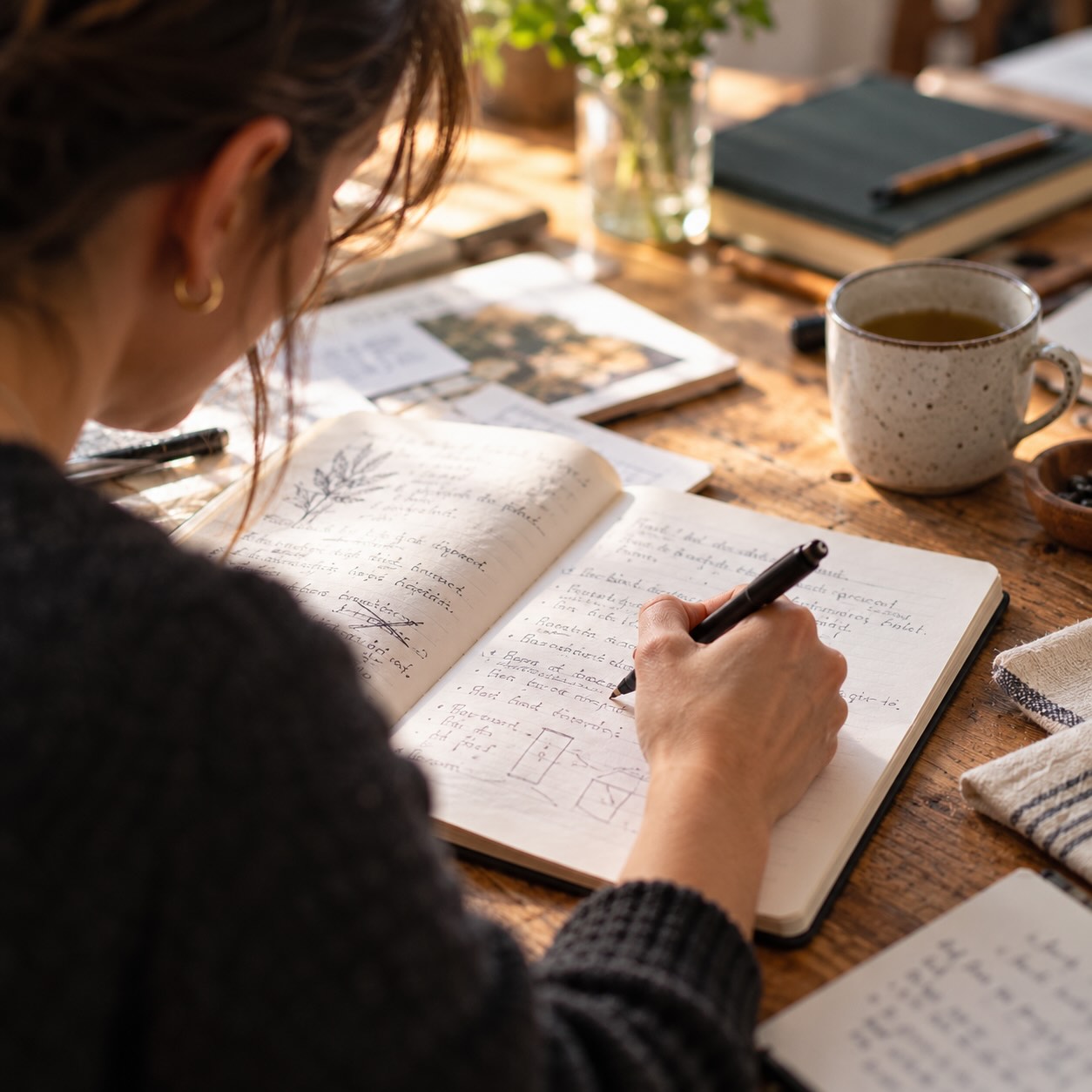
Writing workshop
A creative workshop for the team can start very small. Everyone gets a sheet of paper and ten minutes to write or draw what collaboration should look like in two years. Then all the sheets go up side by side on the wall, and you quickly see where the pictures match and where they don’t. A photo walk through the neighborhood also works, where each person captures what is easily overlooked in everyday life. Afterward you can talk about each other’s pictures.
A personalized notebook is a nice keepsake of the event here, and can be used for drafts and ideas during the workshop.
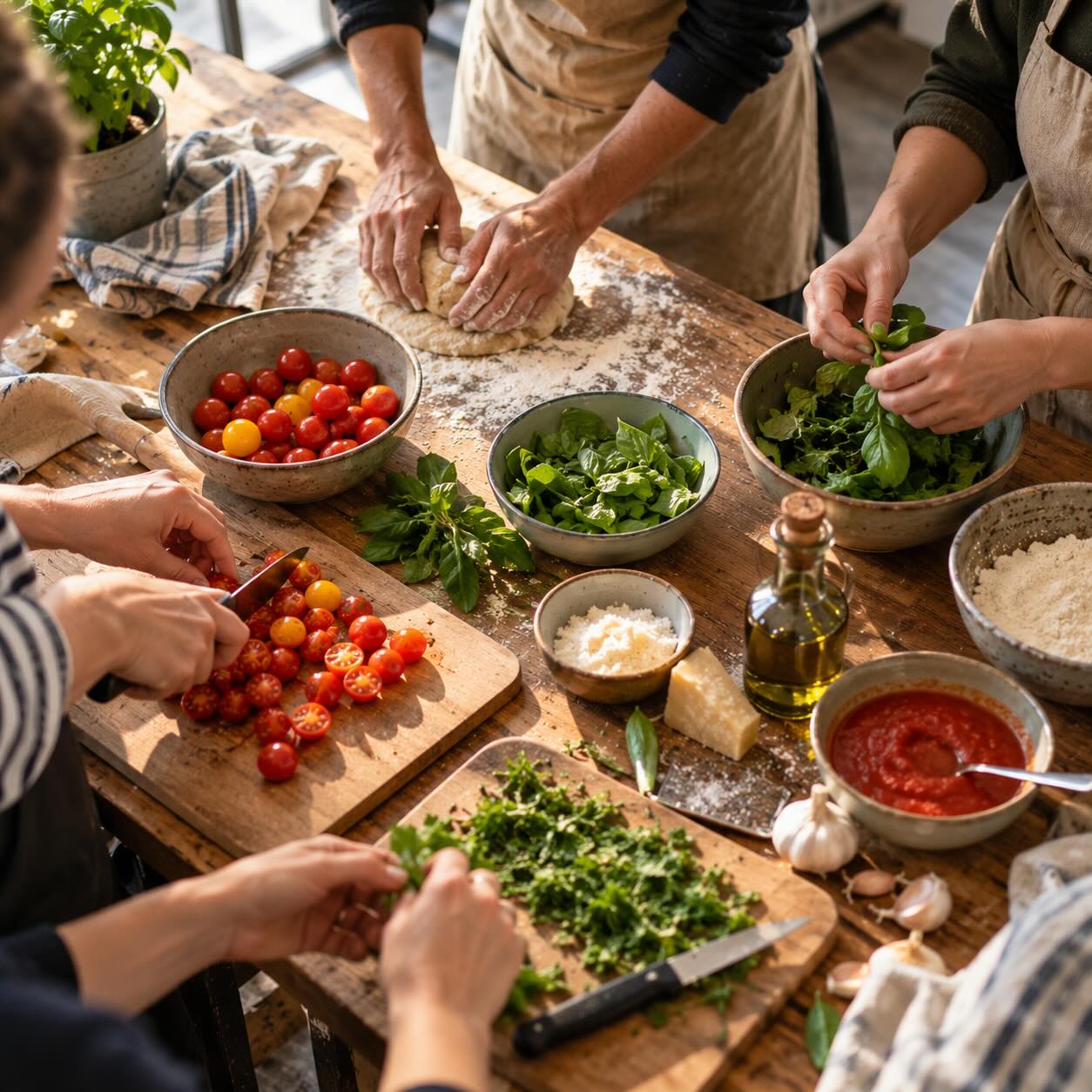
Cooking workshop
When cooking together you see faster than in any meeting who keeps an eye on the time, who improvises and who is first to notice that plates are missing. Tasks distribute themselves without anyone assigning them. That makes cooking and grilling workshops so rewarding for teams: they need no elaborate staging, and there is still plenty to talk about. It works especially well in hospitality, hotels and sales.
An apron can be part of that moment if it is subtly personalized and lives on after the workshop, at the home grill or in the kitchen. It then recalls an afternoon rather than a logo.
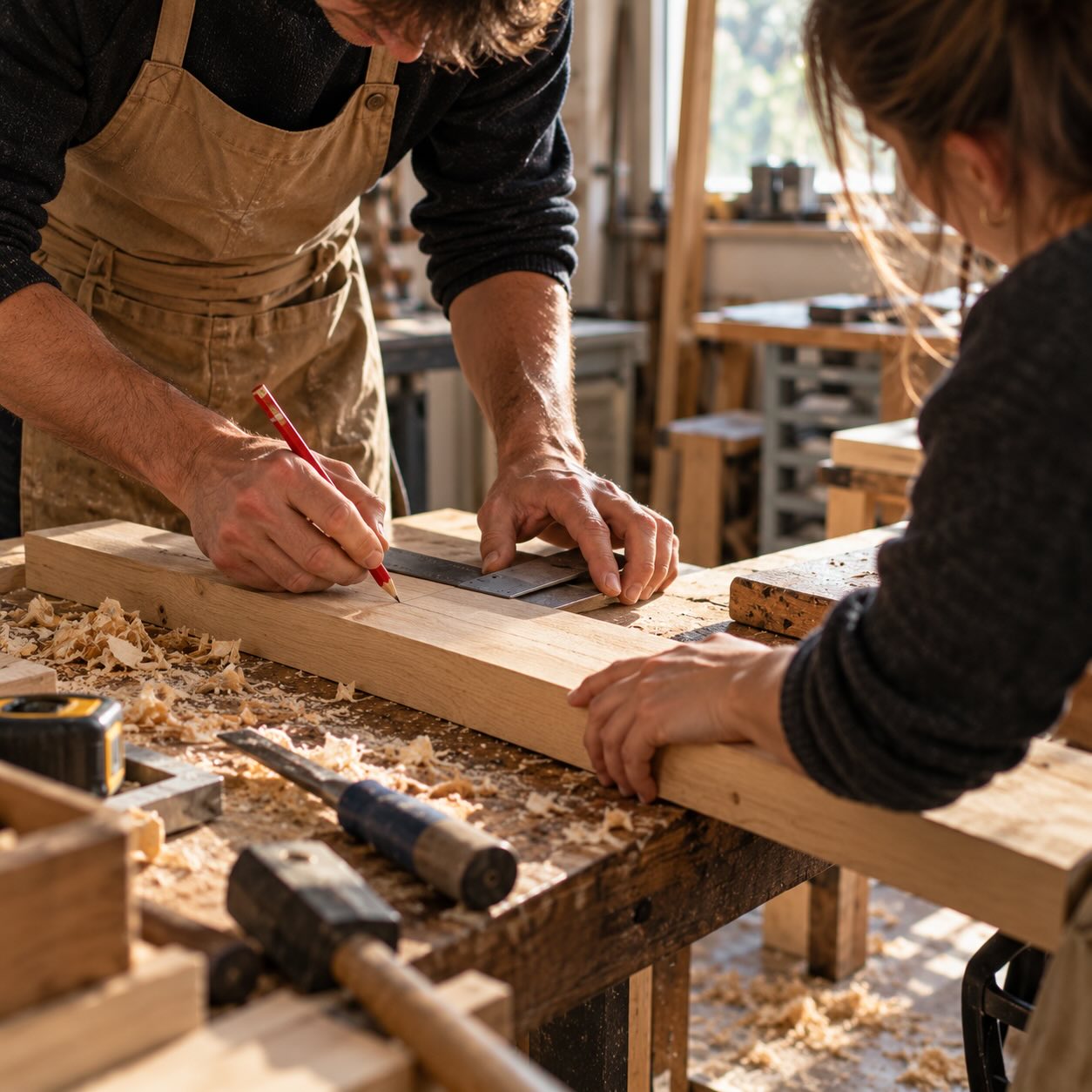
Crafts workshop
Cutting wood, repairing something, building a small object: here the path from first attempt to result is visible. Not every cut fits; some things have to be remeasured. The finished piece is interesting because you know how it came about, not because it looks perfect. Simple companions suit it: a wide carpenter’s pencil, a tape measure, a bag for what you have finished and may take home. What matters is that the item is used in the workshop or lives on usefully afterward.
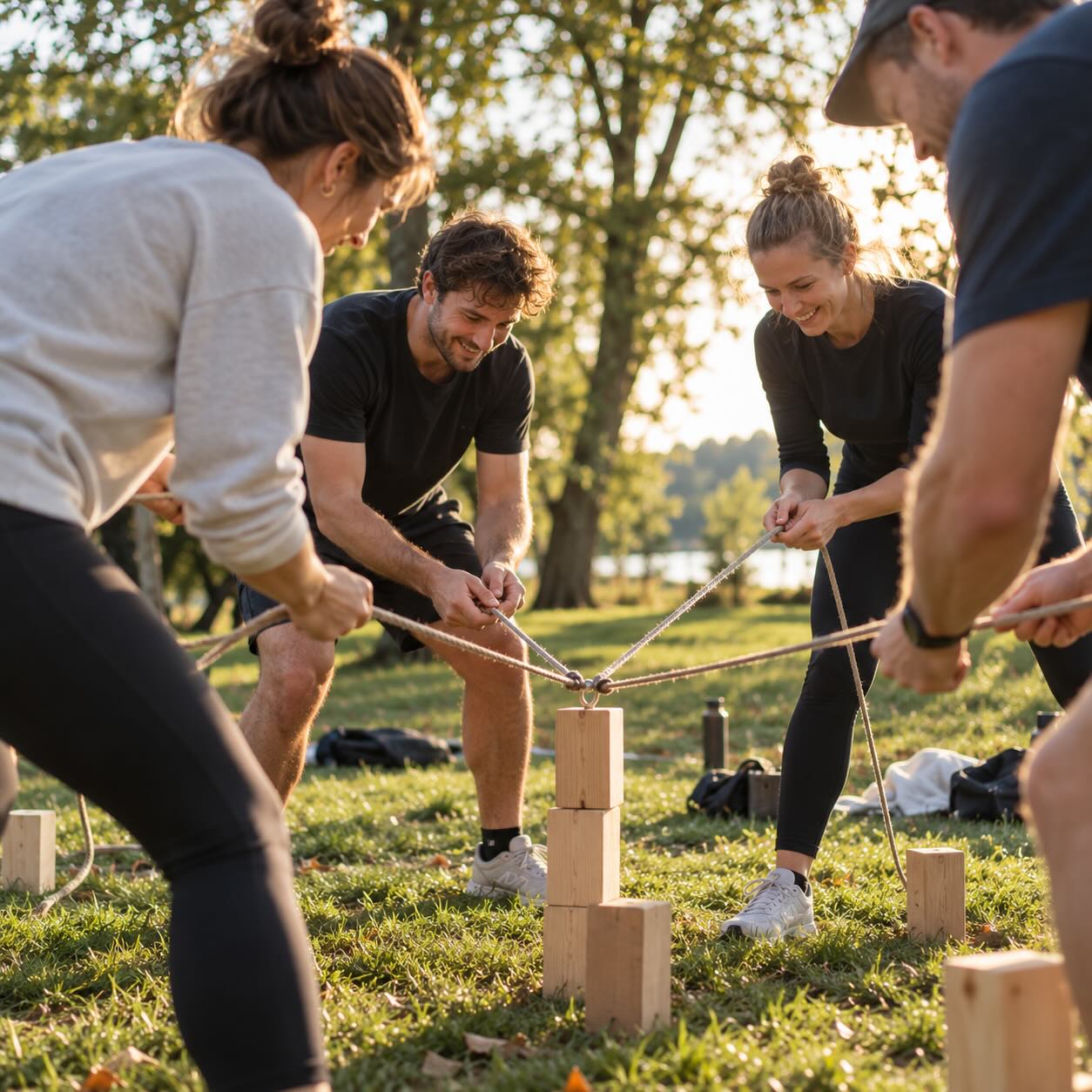
Movement and games
In movement formats, people have to react, coordinate and decide on the spot. That loosens things up, but it can also create pressure when competition takes center stage or physical requirements don’t fit. Cooperative tasks that only the group can solve together avoid that.
How a sporty format can work as a tournament is shown in our article on organizing a corporate padel tournament. And if you would rather meet regularly than once, our article on run clubs for companies has an idea.
1 of 4
Things that keep being used after the workshop
What stays does not have to be tangible. A new skill, a conversation or the feeling of having achieved something together count too. Sometimes, though, there is an object for it.
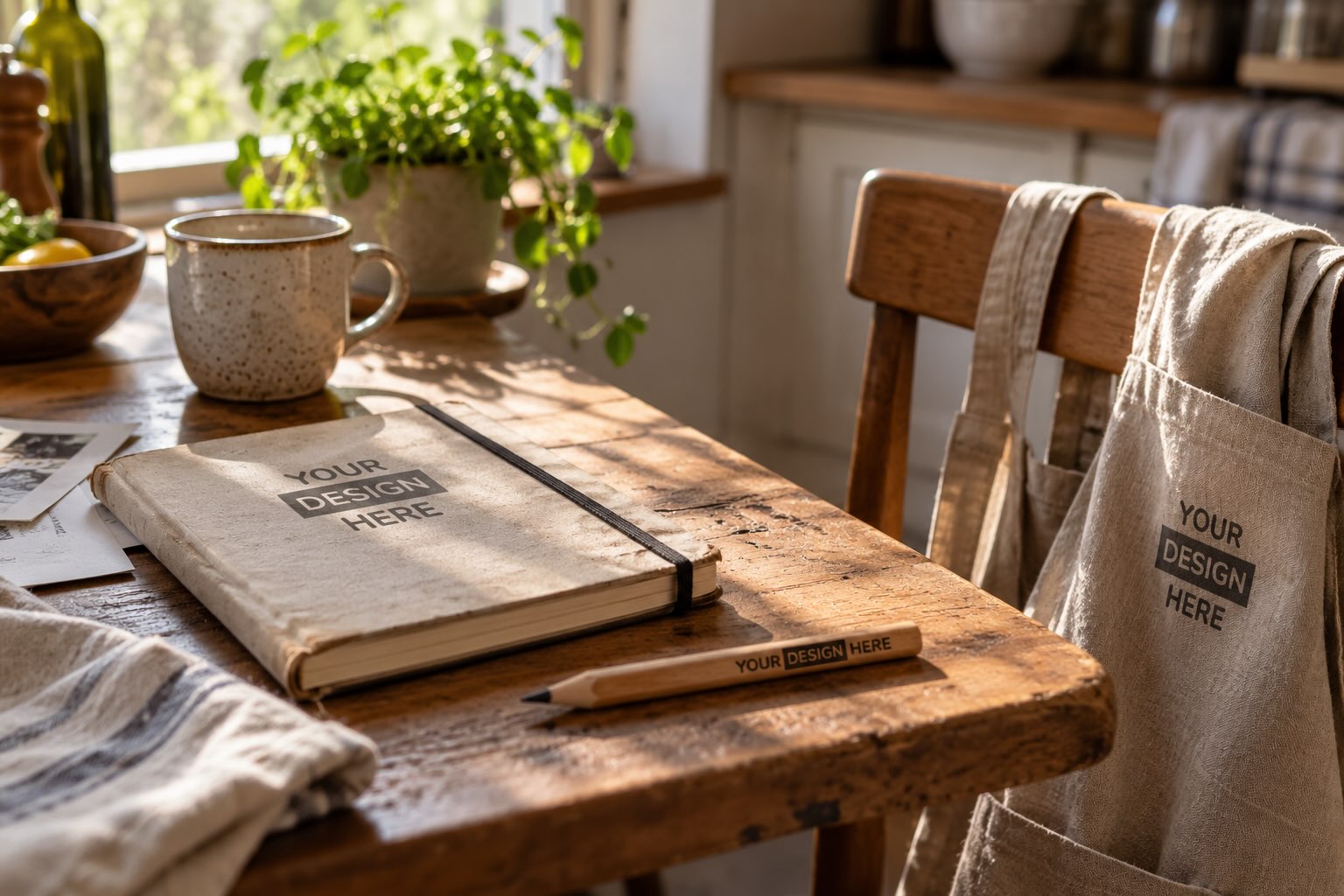
The notebook with the first lines from the writing workshop is still on the desk later. The apron hangs in the kitchen at home. The carpenter’s pencil ends up in the toolbox and is used again on the next project.
Research on personal belongings shows that everyday objects can trigger memories of experiences. For printed workshop items, that has not been shown. A logo does not turn an object into a memory; the story behind it does.
What stays cannot be given away
A workshop does not have to change the whole company. Sometimes a colleague from another department gets a face, where before there was only an email address. Sometimes a shared picture hangs on the wall. And somewhere there is a notebook, an apron or a water bottle that someone keeps using, and that reminds them of an afternoon on which they, for once, ticked nothing off.
Which keepsake fits your workshop?
Notebooks, aprons, bags or complete event packs: choose items people will actually use during the workshop.


Sources
- Mastercard and Trend Hunter: Experience Economy 2026, Germany (press release, 7 May 2026, in German)
- HSM: employee magazine, May 2025, pp. 38–39 (company outing to the Cookionista cooking school, in German)
- GEZE: cooking workshop on sustainable cooking, Leonberg site (June 2025, in German)
- Freeman et al.: Active learning increases student performance in science, engineering, and mathematics, PNAS (2014)
- Belot & Hakimov: The Value of Bonding at Work: Evidence from a Field Experiment, IZA Discussion Paper No. 17987 (2025)
- van den Hoven et al.: review on personal belongings and memories (2021)


