
A reusable coffee cup is hardly an extraordinary object. Yet every year Starbucks manages to turn one into an occasion.
On 13 November 2025, customers at participating Starbucks stores in the United States received a special red Christmas cup when they bought an eligible seasonal drink. It featured a design created for the occasion and was available that day while stocks lasted. Starbucks calls the annual event Red Cup Day, a tradition that began in 2018.
The gift itself was simple. What made it different was the moment in which you could get it.
Why can an everyday object feel more desirable when it is available for only a short time? And what changes when a brand does more than give something away, choosing instead to create a special edition?
For businesses searching for unique corporate Christmas gifts, it is a useful question. Every festive season brings the same challenge: how do you thank employees or clients without giving them something that feels like just another Christmas present?
Perhaps the answer is not always a more expensive product. Sometimes it is the meaning attached to it.
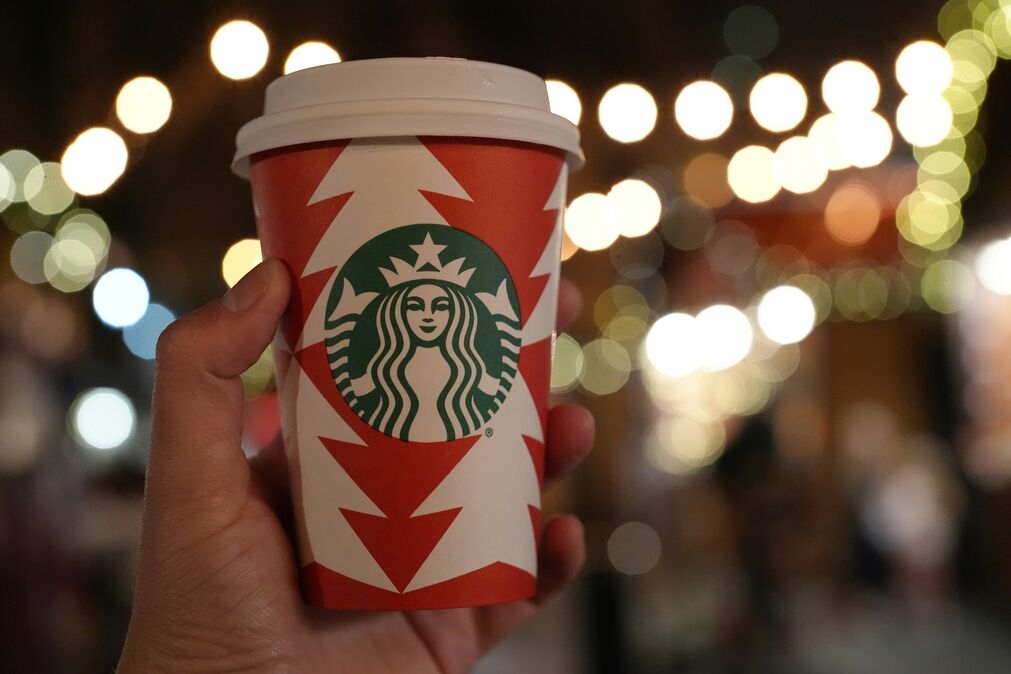
Limited-time does not necessarily mean rare
Starbucks described its 2025 red cup as a limited edition. There was a revealing detail in the announcement, though: the company said it would be giving away more cups than ever before. The production run was not necessarily small. What was limited was the opportunity to receive one.
Only 100 examples of a particular product might exist, making rarity part of its appeal. An annual Christmas edition links an object to a particular moment. A gift created specifically for employees, meanwhile, takes on meaning through the group it was made for.
Those distinctions may seem subtle, but the contexts are different. By introducing a new festive cup every year since 2018, Starbucks has made Red Cup Day part of its seasonal calendar. That does not prove every customer treasures their cup. It shows how a brand can connect an everyday object to a recognisable Christmas ritual.
According to US location-data company Placer.ai, estimated Starbucks visits on Red Cup Day 2025 were 44.5% above the year-to-date daily average. It was a noticeable peak in store traffic, although this comparison cannot tell us how much of it was caused by the cup's limited availability.
Starbucks footfall on Red Cup Day
Estimated Starbucks visits on 13 November 2025, compared with the 2025 year-to-date daily average.
| Comparison | Index |
|---|---|
| 2025 daily average (YTD) | 100 |
| Red Cup Day, 13 November 2025 | 144.5 |
This measures visits, not how much people value a gift. These are estimates of US store visits based on location data. The comparison is not an experiment: it does not show that scarcity caused the increase. The baseline covers all days, not Thursdays alone.
Source: Placer.ai, 19 November 2025. The 144.5 index is derived from the reported +44.5% change. These are not absolute visit counts or figures for other countries.
A particular date can attract plenty of attention without the product itself being rare. So why might limited availability influence how people perceive an object in the first place?
Why scarcity can make something more appealing
If you have ever considered buying a limited-edition product, the feeling may be familiar. You hesitate, see that stock is running low and decide sooner than you expected. Not necessarily because the product has improved, but because the chance to own it might disappear.
Researchers have studied this effect. A 2022 meta-analysis published in the Journal of Retailing brought together 131 studies. It found that scarcity cues can increase purchase intentions, although their impact depends on the type of restriction and the kind of product.
An item available for only one week may prompt a different response from one produced in a fixed quantity. But there is another crucial distinction: wanting to buy something is not the same as appreciating it as a gift. The research does not establish that employees automatically value exclusive Christmas presents more highly.
That matters when an organisation is choosing Christmas gifts for employees. A retailer may use scarcity to encourage a purchase. An employer is usually trying to express appreciation. The feeling of fear of missing out (FOMO) does not necessarily belong in that relationship.
Some brands give a limited edition greater meaning by connecting it to their own history.
James Bond: when an Advent calendar becomes a collector's item
Seven decades, seven drawers and seven exclusive collectables. For Christmas 2024, James Bond released an Advent calendar unlike the familiar box of 24 little doors.
The Seven Decades of James Bond Advent Calendar was released in an edition of 1,000. Its drawers referred to different decades of the 007 films. The black textured packaging and red detailing were part of the concept, while some of the collectables inside were individually numbered.
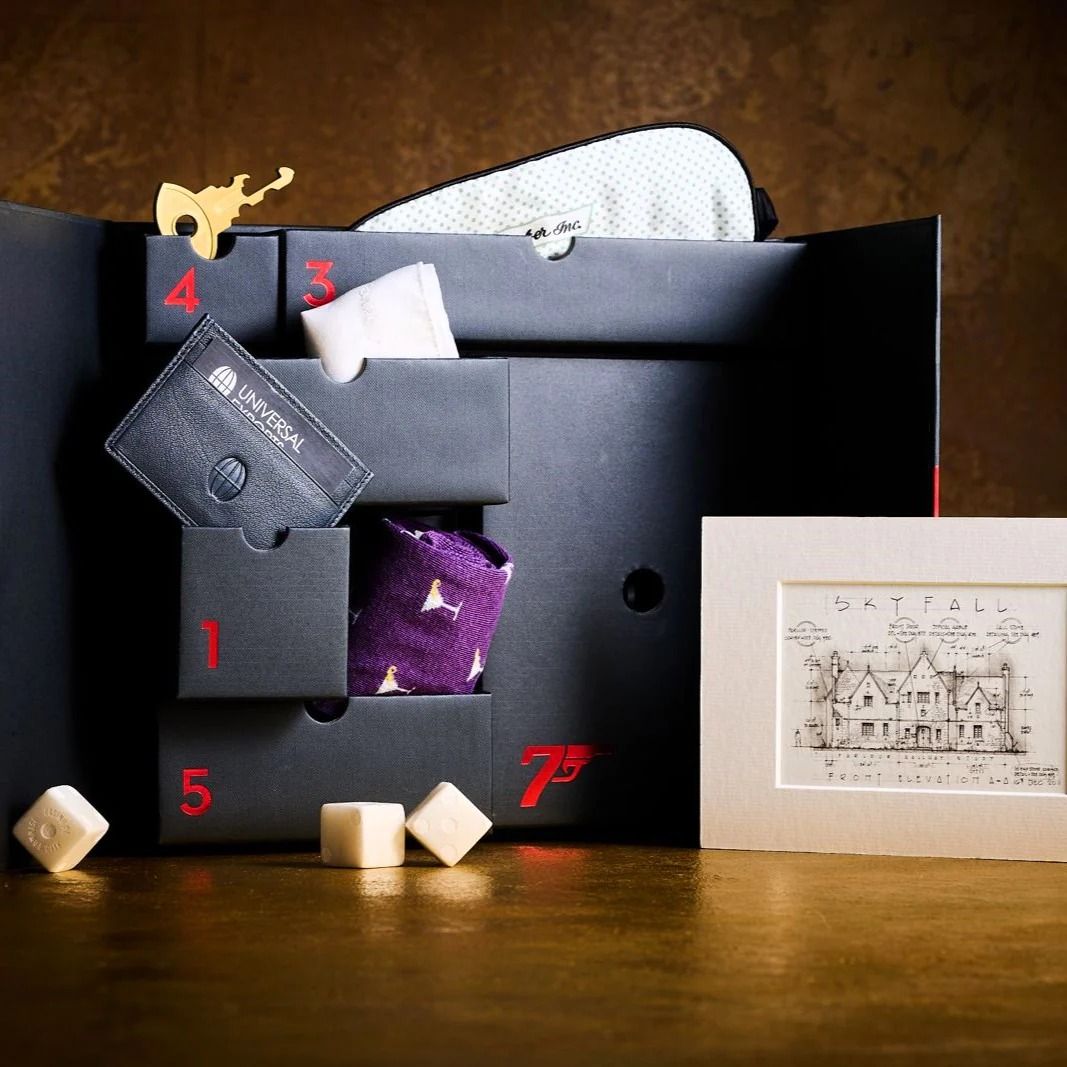
Here, the limited production run was only one part of the appeal. References to familiar films and details from the Bond universe gave the objects a shared context. For a fan, the calendar could mean more than a collection of unrelated items.
But printing a number on a box does not automatically create a valuable collectable. Without a convincing idea behind it, a number is just a number. For businesses planning a distinctive end-of-year corporate gift, the more useful lesson is to decide what the edition should say before asking whether numbering would add anything.
And a company does not need a world-famous film franchise to tell that kind of story. Sometimes the history of a single team is enough.
LEGO: a Christmas gift you cannot buy in a regular shop
In December 2025, a LEGO toy shop appeared that was never intended for the regular retail range. The Danish toymaker had designed a Christmas set for its employees: Toy Store (4002025).
One side of the model shows a snowy toy shop; the other reveals Santa's workshop and a post office. LEGO creates a special Christmas set for employees each year. The 2025 version included eight instruction booklets, making it possible for several people to build different parts together.
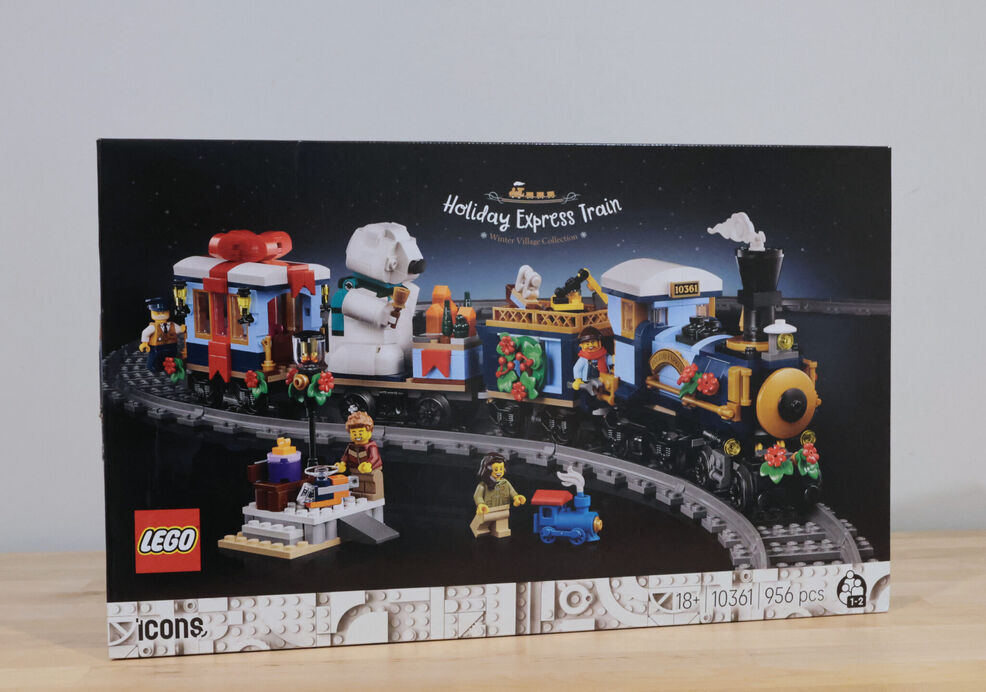
Unlike the James Bond calendar, this example is not built around a publicly stated tiny production run. The set was developed for a particular group: the people who work at LEGO. Its relevance is therefore less about how few there are and more about who it was designed for.
Of course, employees are not the only people who may eventually own one. Copies can appear on resale platforms, and not everyone on the team will enjoy building LEGO equally. Even so, the example shows how an employer can connect a familiar product to an annual occasion through a design made specifically for that year.
For businesses looking for unusual employee Christmas gifts, that is an idea worth considering. Few employers can develop an entirely new product. But an original design, a year printed on the gift or a reference to a shared experience can give an existing item a different meaning.
Your own Christmas edition starts with a reason
Creating a special Christmas edition might sound like something only a major brand with a huge budget could attempt. Yet these three examples point to a simpler starting point: decide what you are marking before choosing the object.
Imagine a company that has completed an important project in 2026. The team has worked together for months and the organisation wants to acknowledge that at Christmas. A standard gift bearing the company logo says little about the year. The same item, designed with an illustration that refers to the project, has a different context.
It might become a reminder of something the recipients helped achieve together. This short interactive guide explores three possible starting points.
Which Christmas edition fits your purpose?
Choose a starting point. You will see a design idea and a practical consideration, not a product recommendation or a prediction of results.
An editorial idea generator. Your choice is not sent or stored. Product options, printing, quantities and delivery must be confirmed separately.
Let the design tell the story
A mug featuring a commissioned illustration might refer to an anniversary, a new office or a milestone shared by colleagues. Personalised Christmas baubles could form an annual series, too: a different design each year, connected by a detail that people come to recognise.
For a genuinely numbered edition, there is an extra condition. A label such as 37/150 only makes sense if the actual edition is limited to 150 pieces. Check whether the chosen product can be individually numbered; a separately numbered gift card may sometimes be a more realistic alternative.
An exclusive edition can still be useful
A gift can become part of someone's routine long after Christmas. Think of a personalised Christmas mug that comes out during the morning coffee break or a Christmas ornament that reappears every December. Neither needs a loud design to make a point.
Businesses exploring corporate Christmas gifts can use Loopper's existing product range as a starting point for their own design or branding. Available materials, print methods, order quantities and lead times vary by product. And a personalised gift is not automatically a limited edition: the restriction needs to be genuine.
Limit the edition, not the appreciation
There is a tension at the heart of exclusive Christmas gifts. In a retail product launch, the idea that not everyone can have an item may increase its appeal. But when a business is thanking employees or clients, excluding people is usually the last thing it wants to do.
A gift does not need to be hard to obtain to feel considered. What makes it special might be a design created for this year alone, a reference to a shared event or an edition made for a recognisable group of people.
The recipient still matters more than the concept. A beautifully numbered gift that sits unused in a cupboard is not automatically better than a simple mug someone reaches for every morning.
Instead of asking how to make a Christmas gift exclusive, start with what you want to give people: a memory, a thank-you or something useful beyond the festive season. Then choose the design, quantity and packaging to match.


