A notebook that always sits on your desk. A travel mug that goes to work with you every morning. Or an umbrella you have used for years without really noticing the logo on it. Some promotional gifts become part of your daily routine. Others end up in a drawer after a single use.
That difference is an interesting starting point for the promotional gift trends of 2027. How do you choose something that catches attention when it is unwrapped, but remains useful long afterwards?
Six directions stand out for 2027: from quiet luxury and understated branding to reusable drinkware, verifiable sustainability and practical technology. Personal touches and tried-and-tested classics also have a role to play. Not because every product is new, but because the way you choose and personalise it matters more and more.
While sustainability, technology and personalisation were already prominent themes in 2026, this year we are looking one step further. Which products fit into the everyday lives of your customers and employees, and how can your brand become part of that?
Quiet luxury: how a smaller logo can make a stronger impression
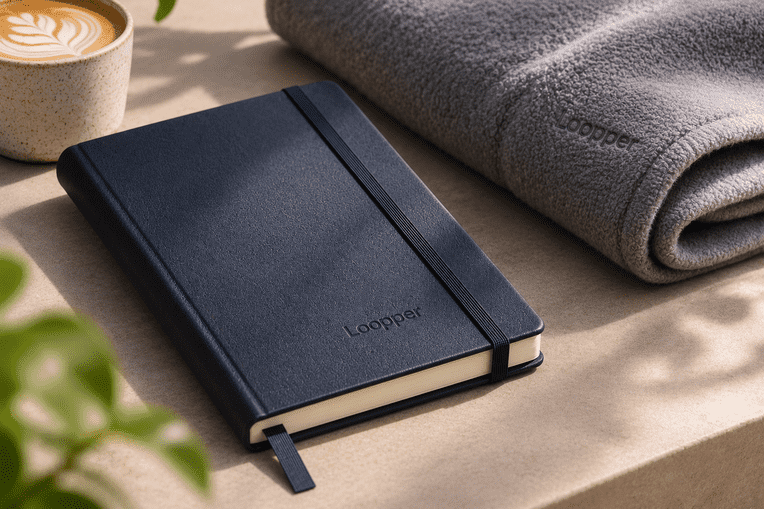
Quiet luxury has its roots in fashion. It is about recognising quality through materials rather than a large logo. Applied to promotional gifts, it means making your branding more understated and letting the product speak for itself.
It is not simply about the size of your logo. Design, quality and how a product feels in everyday use all matter. A beautifully made notebook with subtle blind embossing can feel more at home on a desk than a pen covered in a bold print.
How to use understated branding
- Tone-on-tone: place your logo in a shade just slightly different from the product itself. It creates a calm, premium look, for example on embroidered hoodies.
- Blind embossing: press the logo into the material without ink. An elegant option for notebooks and suitable leather goods.
- Engraving: a lasting finish on suitable metal, wood or glass surfaces. It works well with products designed for long-term use.
- Small logo, clever placement: a mark on the inside or along an edge may only become noticeable at second glance. Our guide to logo placement on promotional products offers more ideas.
To find out which decoration method suits which material, see our guide to printing and decoration techniques.
Products that suit quiet luxury
| Product | Understated decoration | Why it works |
|---|---|---|
| Moleskine notebooks | Blind embossing | Recognisable quality that speaks for itself |
| Bellroy bags | Small logo | Clean design made for everyday carry |
| Fleece blankets | Tone-on-tone embroidery | Soft, warm and made to be used |
| Candles | Subtle label | A calm, considered gift |
| Wireless chargers | Engraving | A practical addition to a desk |
Tip: consider one high-quality gift for your most important clients rather than lots of simple items for everyone. You can also explore our bags and New Year gifts.
Water bottles and travel mugs: everyday favourites
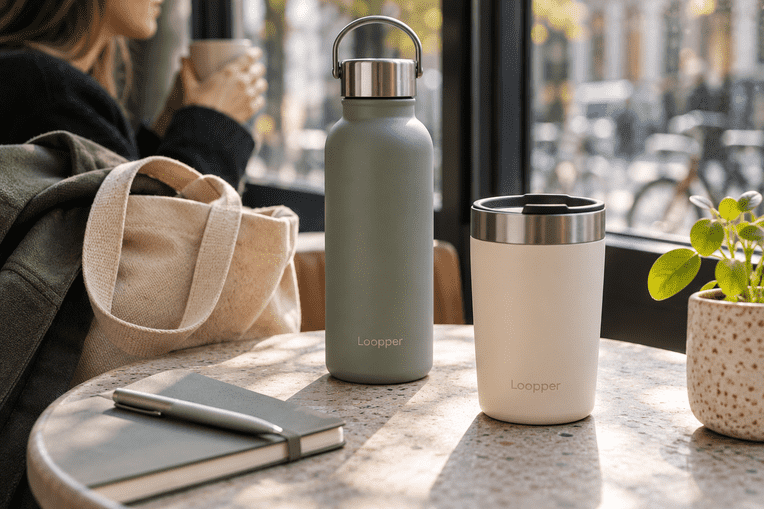
A good drinking bottle goes almost everywhere. That is why water bottles and travel mugs have long been familiar choices for promotional gifts. And because they are so common, choosing the right model is becoming more important.
According to the US-based Advertising Specialty Institute's Ad Impressions Study 2026, 87% of surveyed consumers said they would keep a promotional drinkware item because of its practical value. Another 77% said they would use one at least once a week. These are US findings, but they help explain why usefulness matters so much in this category.
Why people keep promotional drinkware
How American consumers value the practical benefits of branded drinkware.
Would keep a promotional drinkware item because it is useful.
Said they would use the item at least once a week.
In 2027, it will not be just about a striking colour. More importantly, think about the details that make someone want to carry a bottle. Does it fit in a bag? Is it easy to clean? Will it keep their coffee hot?
Which drinking bottle suits your audience?
A standard branded water bottle can work well for sporting activities, events and everyday office use. For employees who travel frequently, printed insulated bottles make sense when temperature retention matters. For coffee on the move, branded travel mugs are another familiar choice.
Size matters too. A large bottle is useful when refilling is difficult, while a compact one slips more easily into a smaller bag. The same goes for drinking openings, handles and insulation. What works well for one recipient may be inconvenient for someone else.
Start by asking where and how the recipient will actually use it.
And when a bottle is designed to last for years, another question comes up: what do we really know about the materials used to make it?
Sustainable, with proof: from promise to evidence
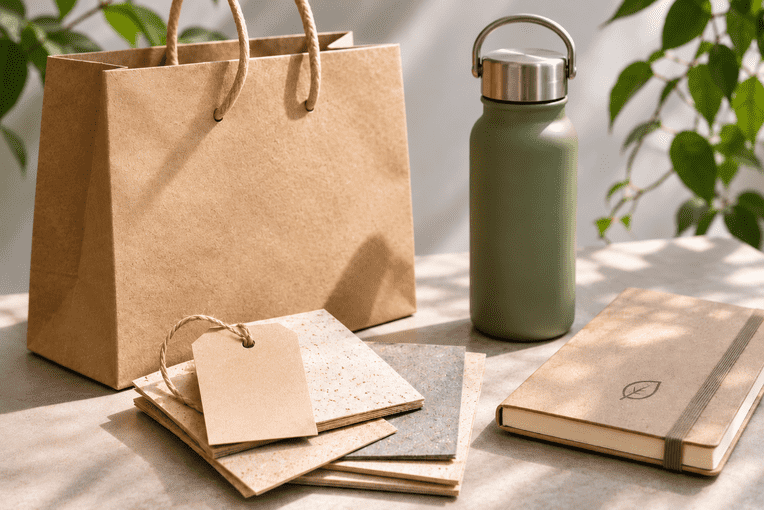
Imagine two shopping bags side by side. One simply says 'eco-friendly'. The other provides information about its materials, the proportion of recycled paper and where it comes from. Which gives you enough information to make an informed choice?
That question is particularly relevant as we head into 2027. Not because sustainability is a new trend, but because broad promises are becoming harder to justify.
Since 27 September 2026, stricter rules on environmental claims have applied in the Netherlands following the EU's Empowering Consumers for the Green Transition directive. According to the Netherlands Authority for Consumers and Markets (ACM), broad claims such as 'green', 'environmentally friendly' or 'ecological' are subject to strict standards. Sustainability labels also face tighter requirements.
For companies purchasing promotional gifts, that makes product information especially important. An item made from recycled material may be an interesting choice, but the word 'recycled' does not tell you how much of it is recycled or the environmental impact of the product as a whole.
Look beyond the sustainability label
Suppose you want to order printed recycled paper bags for an event. You can ask the supplier what proportion of the paper is recycled, what documentation is available and whether any certifications have been independently checked. Also consider whether the bag is sturdy enough for its intended purpose.
The same principle applies to other sustainable promotional gifts. A reusable bottle, a notebook made from recycled paper or a bag made from an alternative material all need to be assessed on their own merits. Reusability, recycled content and long product life are different characteristics. None automatically proves that the whole product is more sustainable.
The 2027 trend is therefore mainly about how you assess and present products. A clear, verifiable material claim tells people more than a vague green promise.
Of course, a well-documented product still needs to be useful in practice. That leads us to another development: technology that is not just new, but genuinely practical.
Tech you actually use every day
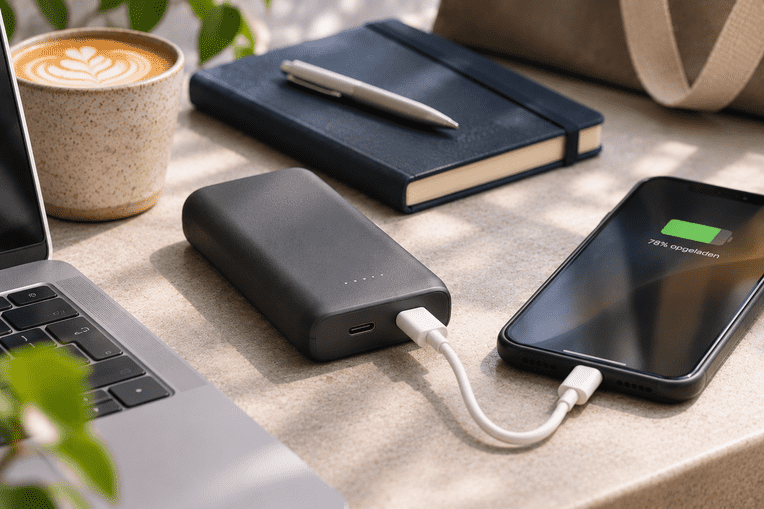
Your phone is nearly out of battery halfway through a busy trade-show day. You still have another meeting and need to stay reachable. That is exactly when a power bank comes in handy. Small everyday problems like these make tech gifts worth considering.
In the US Product Power 2026 study by the Promotional Products Association International (PPAI), nearly 38% of surveyed consumers said that tech-related promotional gifts made a brand seem more modern and relevant. That does not mean every gadget is appreciated. Above all, the product needs to be useful.
For 2027, we therefore expect more attention on technology that people genuinely use. Think branded power banks, wireless chargers and compact charging accessories. Products that fit into a bag or earn a permanent place on a desk.
Choose tech that suits your audience
Not all power banks are the same. Someone who travels regularly may benefit from a higher battery capacity. At an event where visitors carry very little, a compact version may be the better option.
Check the ports, charging speed and compatibility with different devices. A product with impressive specifications is of little value if the recipient cannot use it easily.
The same applies to other branded gadgets. A wireless charger may be useful for office-based employees, while a compact charging cable is better suited to frequent travellers.
So the important question is not which gadget has the latest features, but which problem it solves.
Alongside practical value, a personal detail can make a product feel that bit more special.
Personalisation with names: one product, one recipient
A notebook with a company logo is a familiar promotional gift. But add your own name to the cover and the same notebook feels more personal. You can immediately see that it was made with you in mind.
Personalisation is not new, but it continues to attract attention in promotional products. In a September 2025 PPAI survey, 34.5% of suppliers reported growing demand for decoration and personalisation, while 43.6% saw no significant change. So the trend is not equally strong everywhere.
For 2027, the combination of a company logo and an individual name is particularly interesting. It keeps the brand recognisable while making the gift feel personal.
When does adding a name make sense?
Imagine a new employee receiving a welcome pack on their first day, including a bottle or notebook with their name on it. Or think of a work anniversary when you want to give something more personal than a standard item.
With individual names on promotional gifts, each item in an order can carry a different name. Depending on the product, this may be done through printing or engraving, for example.
Remember the practical details. Double-check spelling and allow for the available print area and production time.
A name does not have to be large or prominent. Sometimes a small detail is enough to give a standard product a personal touch.
Classics that last: why familiar products still work
Not every popular promotional gift has to be new. Sometimes the products that have been around for years are still the right choice. Think of an umbrella that lives in the car or a personal care product you use regularly.
Take umbrellas. According to ASI's US Ad Impressions Study 2026, more than half of surveyed consumers said they would keep a promotional umbrella for at least five years. Another 94% said they would use it at least once a month when the weather calls for it.
These figures describe expectations among US consumers, but they show why a practical product can remain relevant over time.
A classic with the right details
When choosing a branded umbrella, the printed logo is only one consideration. Size, sturdiness and ease of use matter too. A compact folding umbrella fits easily into a bag, while a larger storm umbrella may suit someone who spends a lot of time outdoors.
Alongside practical products, comfort-focused gifts remain worth considering. For example, wellness promotional gifts such as hand cream, personal care items or a scented candle can fit moments when someone takes a little time for themselves.
We therefore expect tried-and-tested promotional gifts to hold their place in 2027. Not because they are groundbreaking, but because they meet familiar needs.
Sometimes a well-made classic is simply a better choice than the latest hype.
What will your promotional gift be in 2027?
The trends for 2027 show that a good promotional gift does not have to be the newest or most eye-catching product. What matters most is what the recipient can do with it.
Whether you choose a notebook with understated branding, a reusable water bottle or a practical power bank, start by thinking about who will receive the gift and when they are likely to use it.
Details matter too, from an individual name to the right decoration technique and clear information about materials.
At Loopper, we help you choose and personalise promotional gifts that suit your audience and your brand.
Ultimately, the most important question for 2027 is not just what you print on a product, but what someone will actually do with it.