
A visitor tastes a new product at a trade fair and carries the samples home in a branded bag. An employee pours morning coffee into a reusable travel mug. A guest is served a drink in glassware with a discreet company mark. These objects have something in common, but each serves a different moment.
Promotional products for the food and beverage industry make more sense when they connect to preparing, storing, serving or tasting food and drinks. When an item comes into contact with food, suitability and safety requirements matter too. Edible giveaways bring a separate set of questions about labelling and handling.
What should food and drink brands check for safety?
Putting a logo on a bottle or chopping board does not change the first question: is this item suitable for the intended contact with food or drink? Consider serving temperature, contact time, cleaning and the materials used on the food-contact surface. A bottle designed for cold water is not necessarily suitable for boiling tea.
In the European Union, Regulation (EC) No 1935/2004 establishes general rules for materials intended to contact food. More detailed requirements apply to certain materials. For instance, specific rules require declarations of compliance for some materials, including certain plastics. The same documentation requirements do not apply to every product or material. Outside the EU, additional or different local requirements may apply.
Check the actual product, not just its category. Ask the supplier which surfaces touch food or drink, what temperatures and conditions the item is designed for, and which test reports or compliance documents are appropriate. Check whether coatings, prints or removable parts affect its intended use.
A cooler bag does not necessarily present the same food-contact question as a drinking spout. The answer depends in part on whether food touches the bag directly or is carried in separate packaging. Treat each application on its own terms.
Which promotional products fit the food and beverage industry?
Start with what people are doing, not a catalogue. Are they pouring, chilling, serving, preparing or carrying something? The answer gives a more useful starting point for choosing a branded item.
Water bottles and insulated mugs
These can connect naturally with coffee, tea, water and beverage brands. A mug makes sense on a commute; a bottle can also be useful at an event. Explore personalized water bottles.
Glassware and serving items
A branded glass can become part of a tasting or hospitality experience. Consider how subtly the branding can sit alongside the drink itself. Browse personalized glassware.
Kitchen accessories and aprons
These are relevant to caterers, cooking demonstrations and brands associated with food preparation. An apron is not a food-contact item in the same way as a cutting board. See kitchen giveaways.
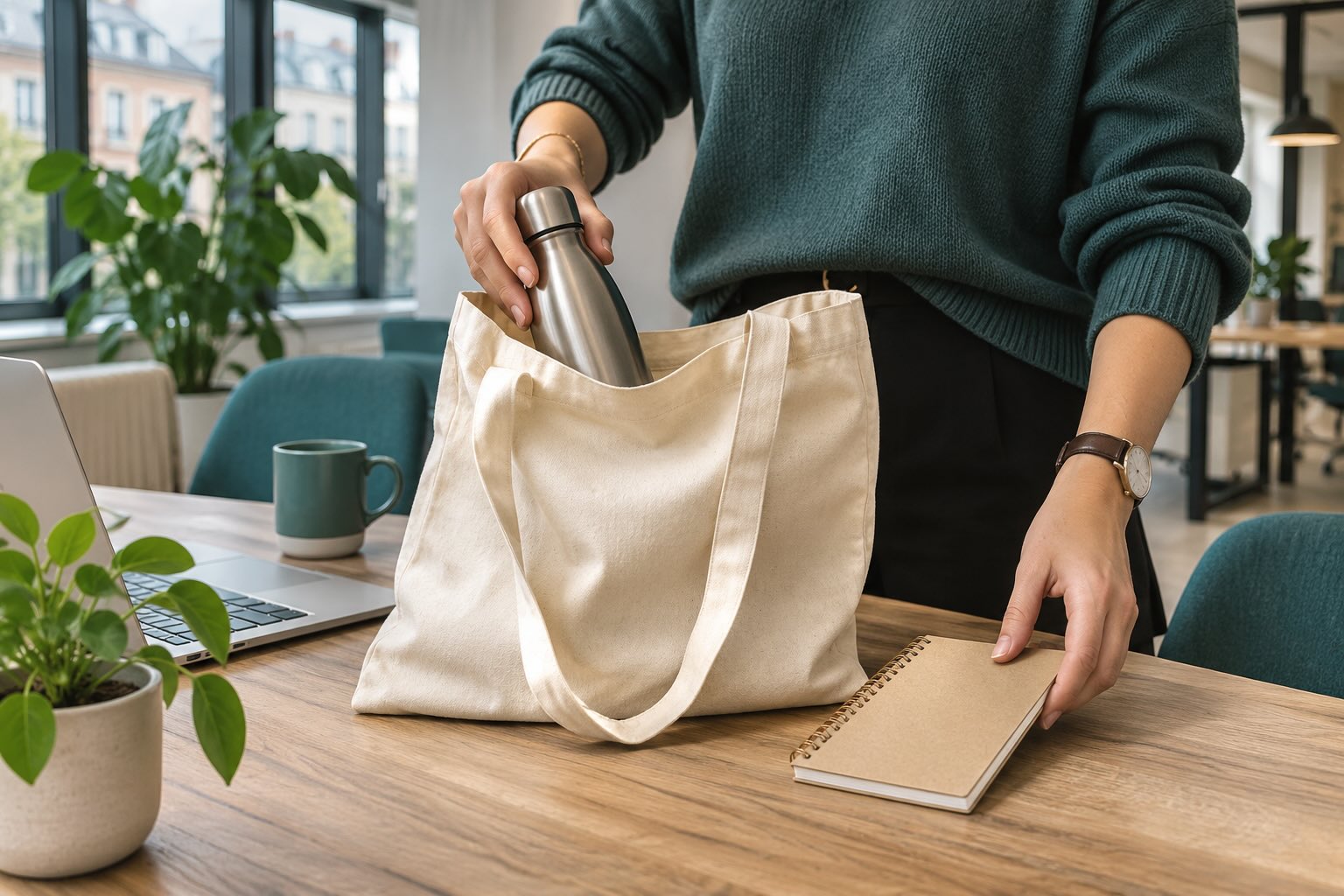
Bags for samples and takeaway items
A sturdy bag can help visitors carry leaflets, samples or packaged products. Temperature control for chilled food is a separate logistical requirement. Explore personalized bags.
| Item | Useful moment | What to consider |
|---|---|---|
| Reusable water bottle | Trade fair, sporting event, employee gift | Drinking opening, material and cleaning |
| Insulated travel mug | Morning coffee, commuting, office | Temperature suitability, lid and care |
| Branded drinking glass | Tasting, hospitality, client gift | Suitability for the drink and decoration |
| Kitchen apron | Cooking demonstration, catering | Fit, washing instructions and logo placement |
| Carry bag | Packaged samples and event materials | Comfort and the weight of the contents |
An object feels less like an advertisement when it makes the right moment a little easier.
What should you consider with edible promotional gifts?
Chocolate, biscuits and other small treats can be a pleasant way to end a conversation. But food packaging is not simply a spare advertising surface. If you distribute prepacked food, the required food information must be accurate and available.
For products marketed in the EU, Regulation (EU) No 1169/2011 covers food information, including ingredients, allergens and other mandatory particulars. Date marking and additional requirements depend on the food and how it is supplied. Non-prepacked food can carry allergen-information obligations too. For campaigns elsewhere, check the applicable national requirements.
Before approving a branded chocolate wrapper, establish what information the final pack must show. That makes it easier to determine how much room remains for the logo or campaign message. Personalized candy can be a starting point, but every edible item still needs to be assessed individually.
Think about storage and delivery as well. Heat-sensitive chocolate, fragile biscuits and products with limited shelf life require different handling. Attractive packaging does not replace appropriate food logistics.
How can sampling and giveaways work together at food trade shows?
Tasting is often the centre of a food industry event. A promotional item should support that experience rather than compete with it. A carry bag can be immediately helpful for packaged samples; a recipe card might give visitors a reason to try the product again at home.
International events such as Anuga, SIAL and Alimentaria illustrate the settings where brands may combine product samples with useful objects. They are examples of relevant trade fairs, not evidence that a particular giveaway campaign s쳮ded. A better planning question is: what should a visitor be able to do during and after the conversation?
For a brief interaction
Choose a small, practical item that suits the sample or information being handed over. Consider the visitor's journey around the event and how easy the item is to carry.
For a more detailed conversation
A relevant sample pack or carefully chosen gift might make sense for an interested buyer. The contents should reflect their needs; a larger gift is not automatically more effective.
After an event, record the questions visitors asked and which materials they requested. That offers more useful evidence about their interests than assuming every item handed out increased brand recall.
When does a seasonal promotional gift make sense?
Food and drink brands naturally move through the seasons. Timing is part of the story: an insulated mug fits cooler weather, a cooler bag suits a summer activity, and kitchen items can complement a cooking demonstration or shared meal.
| Season | Possible occasion | Relevant item |
|---|---|---|
| Winter | Hot drinks, year-end gifting | Insulated mug, tea or chocolate set |
| Spring | Outdoor meals, cooking demonstrations | Apron, recipe card, reusable bottle |
| Summer | Festivals, picnics, sampling | Carry bag, reusable cup, cooler bag |
| Autumn | Harvest themes, cooking, festive planning | Kitchen textiles, serving item, gift packaging |
A branded advent calendar, for example, can fit a business with small packaged food items. But it would be misleading to assume that it automatically produces 24 meaningful brand interactions. The experience depends on the contents, the recipient and whether the calendar is actually used.
Which items fit different food and drink businesses?
A brewery and a dairy producer may speak to some of the same people, but their products are experienced differently. Match the branded item to the activity around the product, rather than relying on a universal list of popular giveaways.
| Business segment | Example item | Why it fits |
|---|---|---|
| Coffee and tea | Mug or insulated cup | Connects with preparing and drinking |
| Breweries and beverage brands | Glass or bottle opener | Connects with serving and tasting |
| Hospitality and catering | Apron or kitchen accessory | Fits into food preparation and service |
| Dairy and fresh food | Carry bag or cooler bag | Helps with transport; temperature control must be addressed separately |
| Confectionery | Packaged edible gift | Lets someone experience the food itself |
How do you choose a useful promotional product for this industry?
A good brief starts with four questions: who receives the item, when will they receive it, how will they use it, and what product or food-safety requirements apply? Only then is it time to decide on materials, dimensions, printing and quantities.
At Loopper, choices can include branded water bottles, glassware, kitchen accessories and edible giveaways. Before ordering, confirm current product specifications, personalization options and any documentation relevant to the intended use.
A product becomes a more thoughtful promotional choice when it helps at the moment it is given for. In food and beverage, those moments are tangible: pouring, carrying, preparing, serving and sharing.
Keep reading at Loopper


Sources and regulations
Loopper Marketing Team
Wissam writes about the design, everyday use and practical value of promotional products.
 Content reviewed byLars Rud, Marketing Manager at Loopper


