To clean a reusable water bottle, wash the body and removable parts with warm water and washing-up liquid, use a soft bottle brush to reach the bottom, rinse thoroughly and let everything air-dry with the lid off, following the manufacturer’s instructions.
Your bottle goes from your desk to your backpack and the side of your gym bag. You refill it often, but cleaning can end up being little more than a quick rinse under the tap. A thorough wash also means scrubbing the surfaces and reaching the less accessible areas: screw threads, drinking spouts and the groove beneath the seal. CamelBak’s care and cleaning guide explains how cleaning methods differ between bottle and lid designs.
How to wash your water bottle after use
If you use your bottle every day, washing it daily is a good routine, even if it only holds water. Drinking directly from the opening can transfer bacteria from your mouth to the container. In Baylor College of Medicine’s water bottle guidance, infectious diseases specialist Dr Yuriko Fukuta recommends cleaning after each use, taking the parts apart, using a clean brush where possible and allowing them to air-dry.
To wash it by hand:
- Empty the bottle and separate the lid and removable accessories.
- Wash inside and out with warm water and a little washing-up liquid.
- Use a soft bottle brush to scrub the bottom and inside walls.
- Clean the lid, including the threads, drinking opening and accessible components.
- Rinse every part thoroughly and leave the pieces to dry separately.
Clean your bottle before using it for the first time, too, following the instructions supplied with it. If you use it for sugary drinks, pay particular attention to residue when washing it after use. Decathlon’s hiking bottle care guide highlights first-use rinsing and careful cleaning after sugary drinks. For handwashing with warm soapy water and a bottle brush, see Hydro Flask’s cleaning guide.
Lids, seals and straws: the places to reach
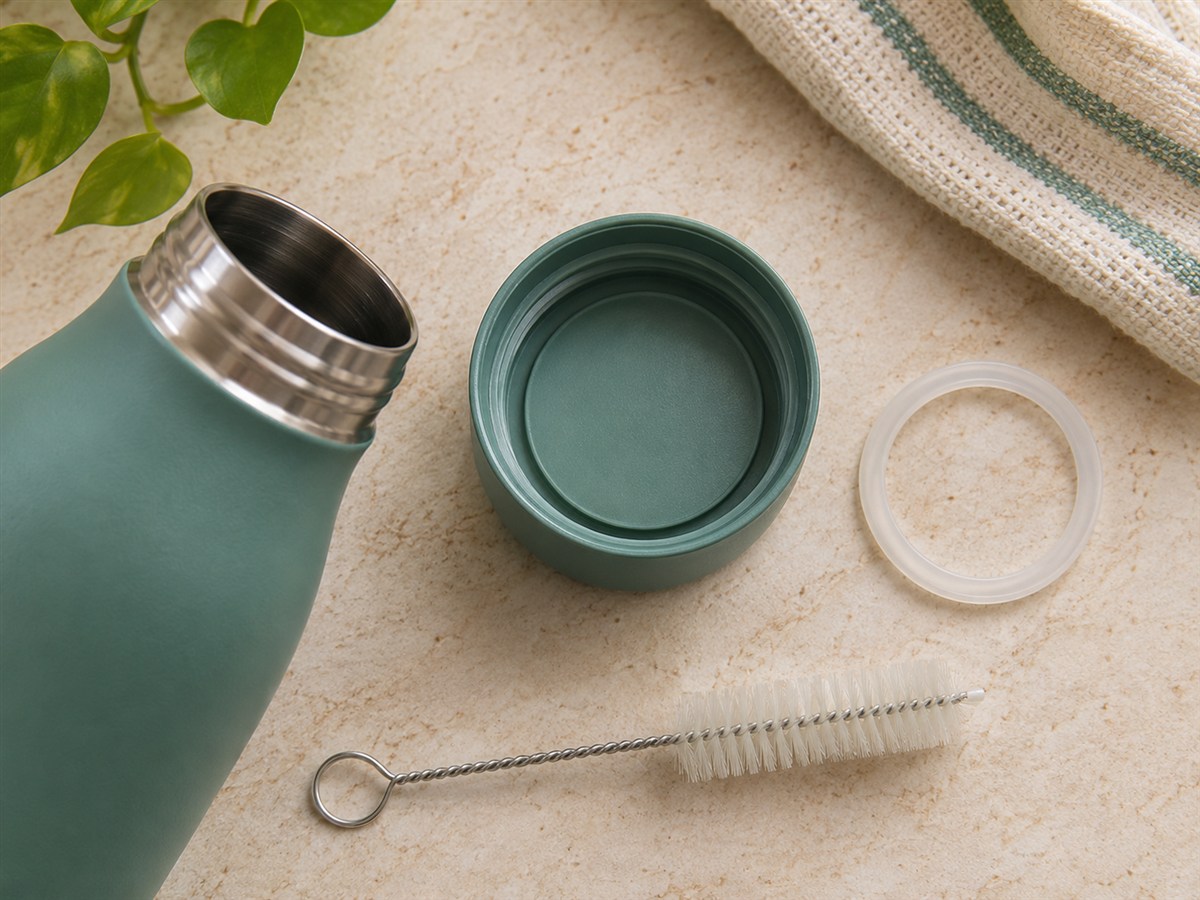
The bottle body can look clean while residue remains beneath the lid. Check the grooves, drinking spout and straw, if there is one. Use a narrow cleaning brush that fits inside the straw.
Only remove the seal if your model is designed to allow it. Some lids have a removable sealing ring so you can clean the groove beneath it; others have fixed components. SIGG’s FAQs describe both designs, which is why instructions for one lid do not automatically apply to another. After washing, refit each part in its intended position.
What to do about lingering odours, stains or limescale
Start by checking your cleaning routine: did the brush reach the bottom? Did you wash the lid? Is there residue beneath a removable seal?
If ordinary washing is not enough, look for a treatment recommended for your model. Amounts and soaking times are not universal. For a lingering plastic taste, CamelBak’s cleaning guidance recommends a warm-water and bicarbonate-of-soda treatment lasting approximately 40 minutes to one hour. Decathlon’s instructions for specified Tritan bottles, by contrast, allow an overnight soak in water and bicarbonate of soda. These are instructions for different products and problems, not interchangeable recipes for every bottle.
The same care applies to tea stains and limescale: choose a product or method explicitly compatible with the container, follow its instructions and rinse thoroughly.
A treatment for odours or stains should not automatically be described as disinfection. If you find mould, follow the manufacturer’s guidance on cleaning and replacing affected components. SIGG, for example, says to replace its classic screw cap if the fixed sealing ring develops mould, as explained in its cap care FAQs.
Stainless steel, aluminium and plastic: what to check
The material is a useful starting point, but it does not tell you everything about a bottle. Coatings, decoration and lid components matter too.
| Bottle type | What to check before washing |
|---|---|
| Stainless steel, including insulated bottles | Whether the model is dishwasher-safe, which detergents are suitable, and whether the body and lid have different care instructions. |
| Aluminium | Whether there is an internal coating and how to protect it. SIGG specifies mild cleaning agents and handwashing for its aluminium bottles. |
| Plastic and Tritan | Permitted water temperatures, dishwasher compatibility and any limits on soaking time. |
| Printed or painted surfaces | Care instructions for the decoration as well as the underlying material. |
These checks help you avoid applying one rule to products built differently. SIGG’s instructions and Hydro Flask’s dishwasher guide show why identifying the model matters.
Can you put a water bottle in the dishwasher?
Yes, if the instructions for your model allow it. Check the body, lid, seals and straw separately: one dishwasher-safe component does not mean every part can go in.
Even products from the same brand can have different requirements. Hydro Flask distinguishes dishwasher-safe bottles from older models that need handwashing, and excludes its Trail Series from dishwasher use. Knowing that a bottle is insulated or made from stainless steel is therefore not enough to decide. The distinctions appear in Hydro Flask’s official guide.
For a personalised bottle, check the care instructions for the print too. If the guidance is unclear, ask the supplier before choosing a dishwasher cycle.
How to dry and store your bottle
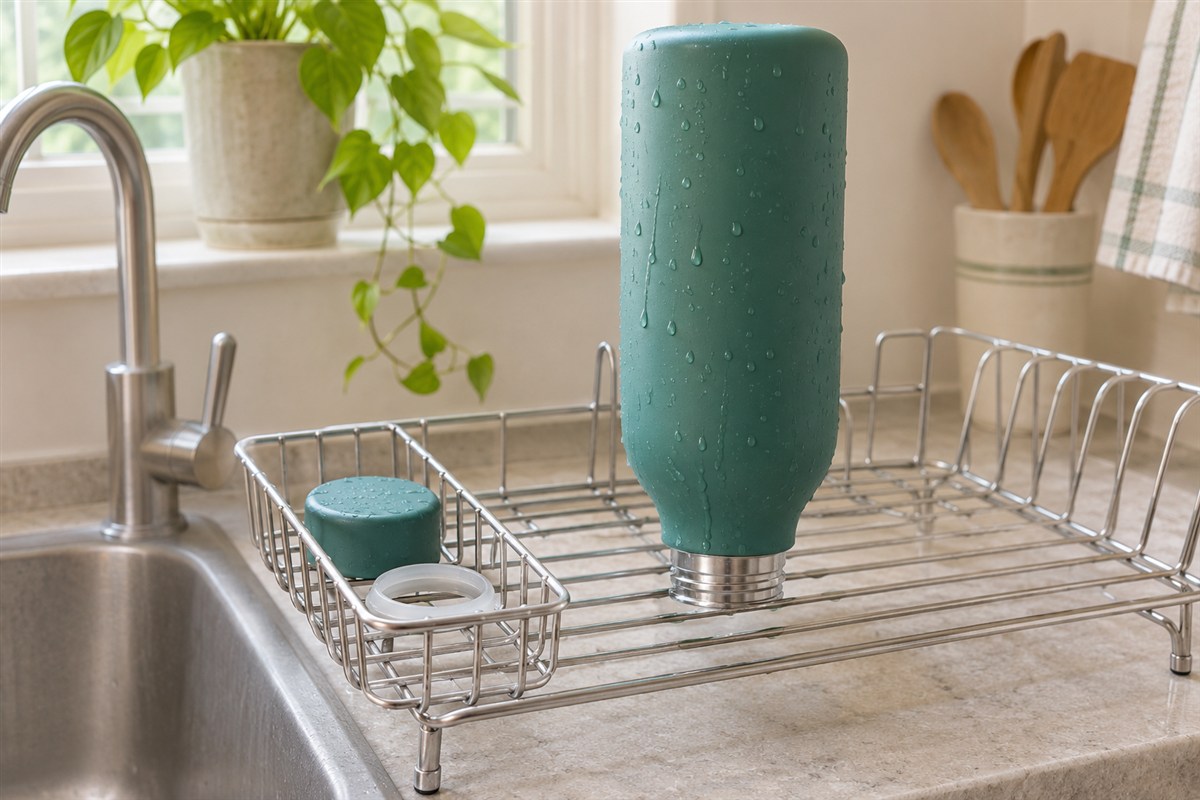
After rinsing, let the bottle drain on a clean drying rack with its opening unobstructed and the lid separate. Allow the accessories to dry before reassembling them, and store the bottle open, as advised in Decathlon’s bottle care guide.
If you are choosing personalised water bottles for a team, consider the cleaning routine too. How easy is it to reach inside? Can the lid be taken apart? Which components are dishwasher-safe?
When handing out the bottles, include the instructions for that model. Knowing how to wash a reusable bottle is part of using it every day, just as much as knowing where to refill it.